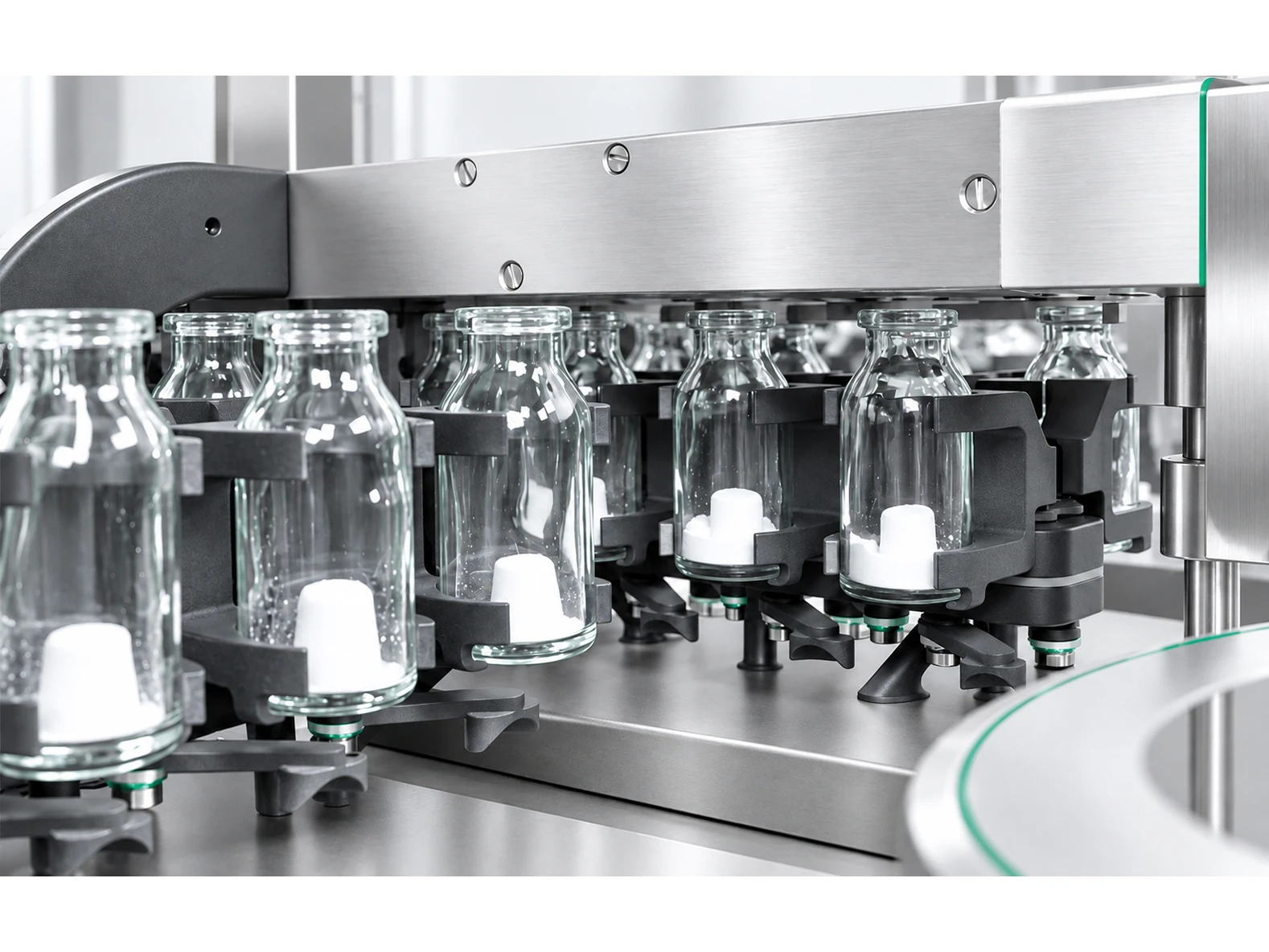
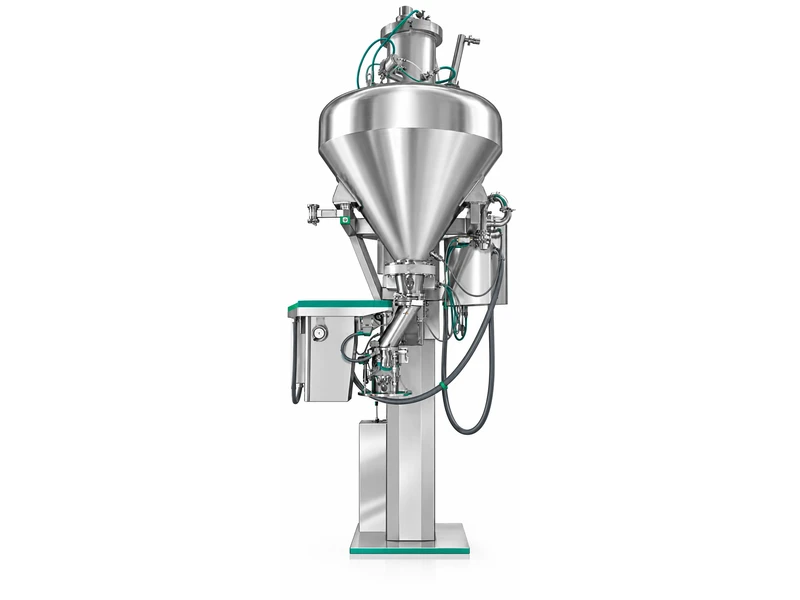
01 An auger conveys powder through screw movement, while a drum-based method meters and releases powder through its cavities. Flow, cohesion and reservoir opening affect which arrangement can fill the required charge without unacceptable residue.
With a matched tare and gross measurement, the difference represents the added charge. The same reservoir must remain identified at both points, and measurement resolution, settling time and external residue affect the result.
Where feedback adjustment is included, measured fill results can guide a bounded change to the dosing setting. The correction strategy must distinguish a sustained shift from a single abnormal reservoir and retain the specified reject limits.
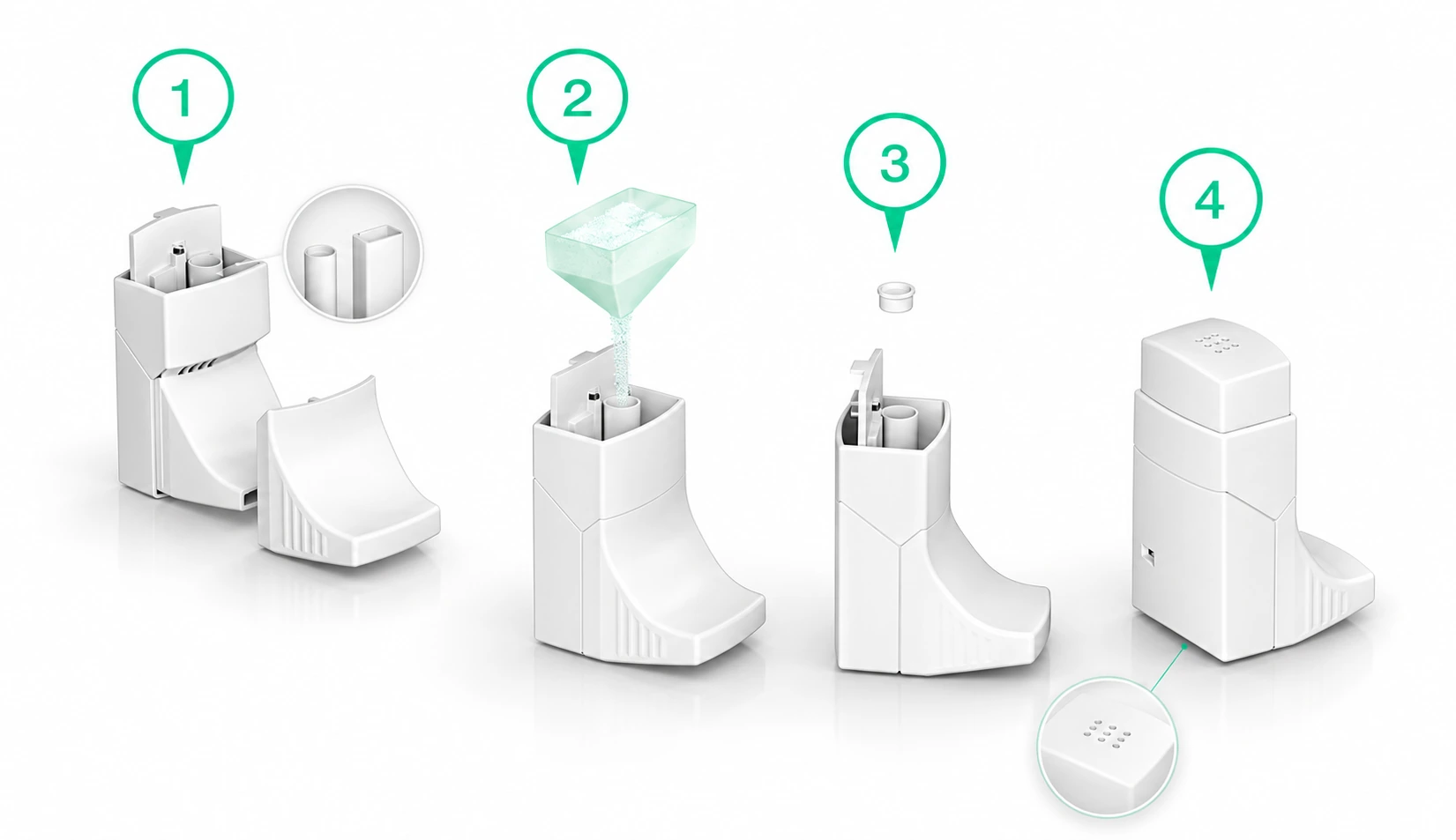
02 Close the reservoir without trapping powder
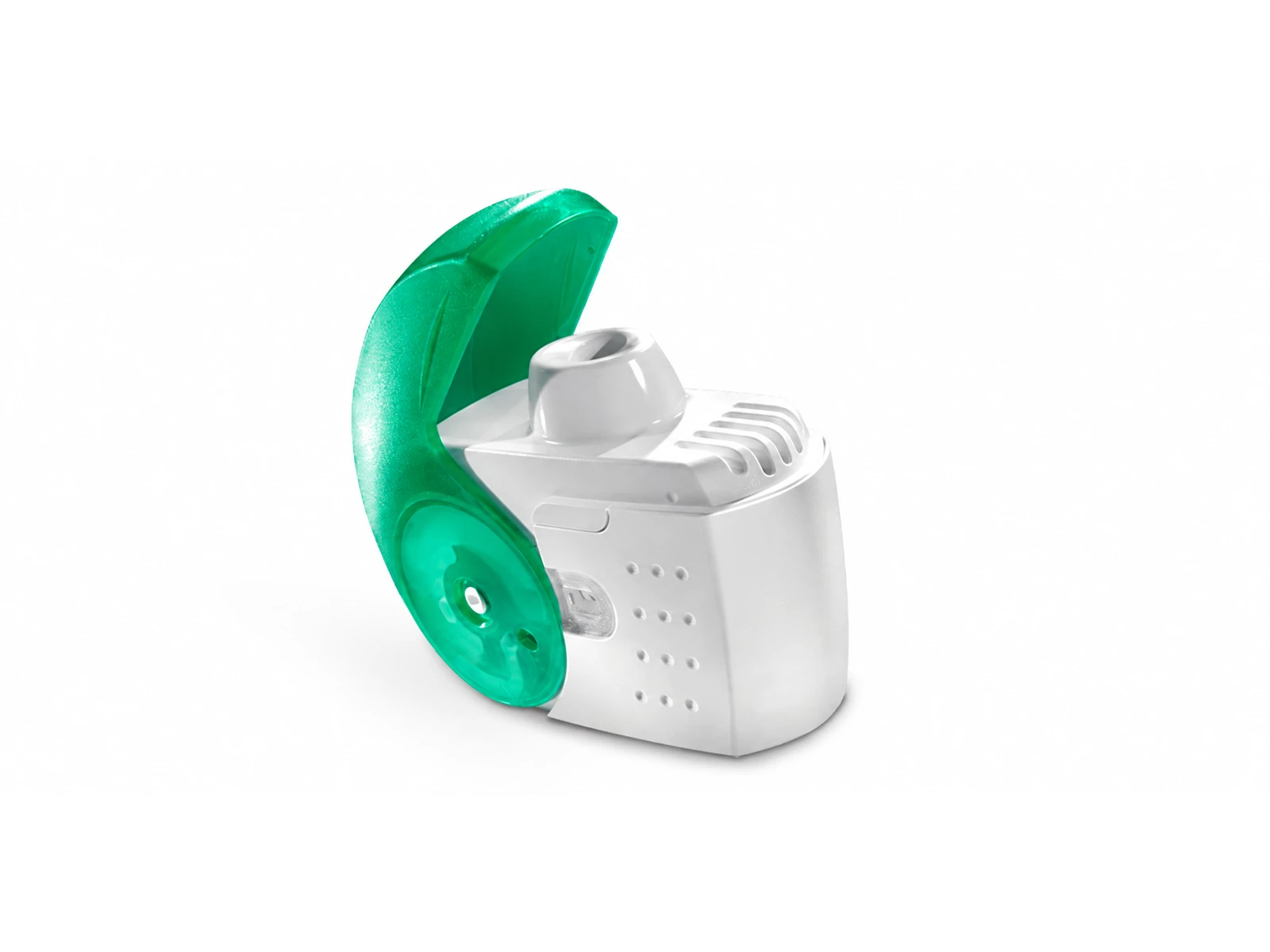
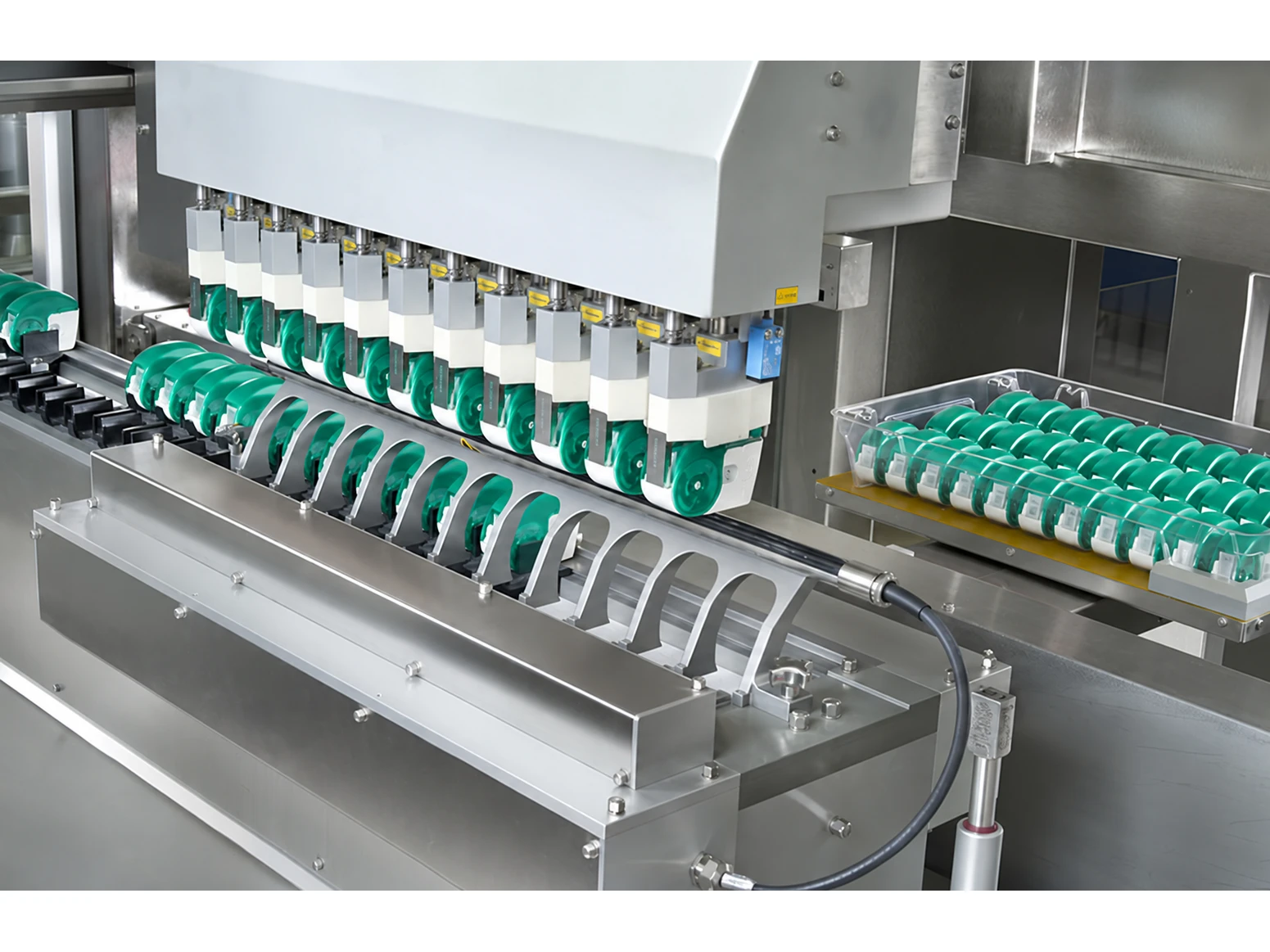
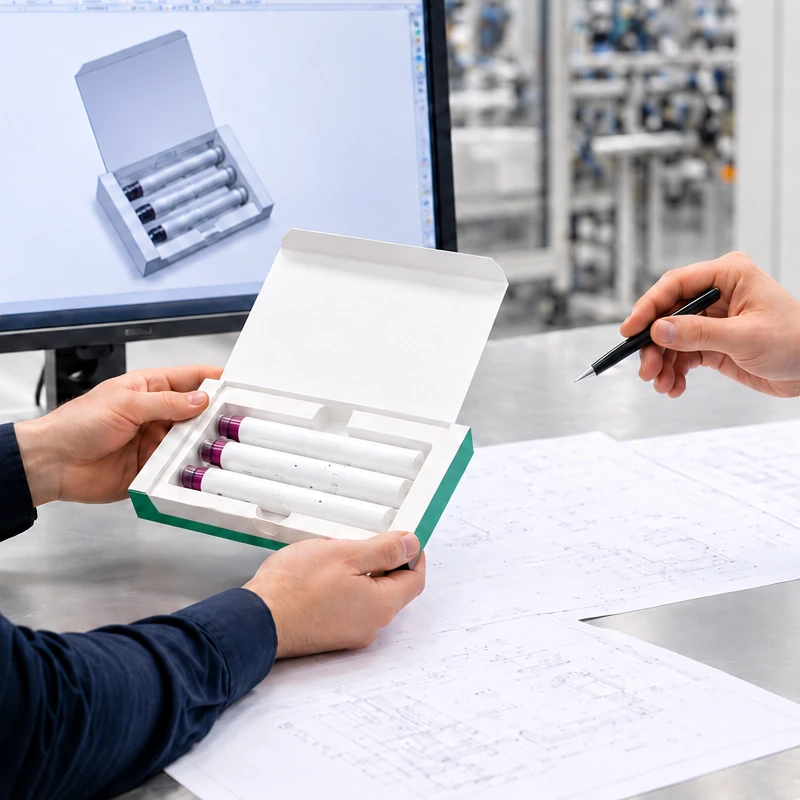
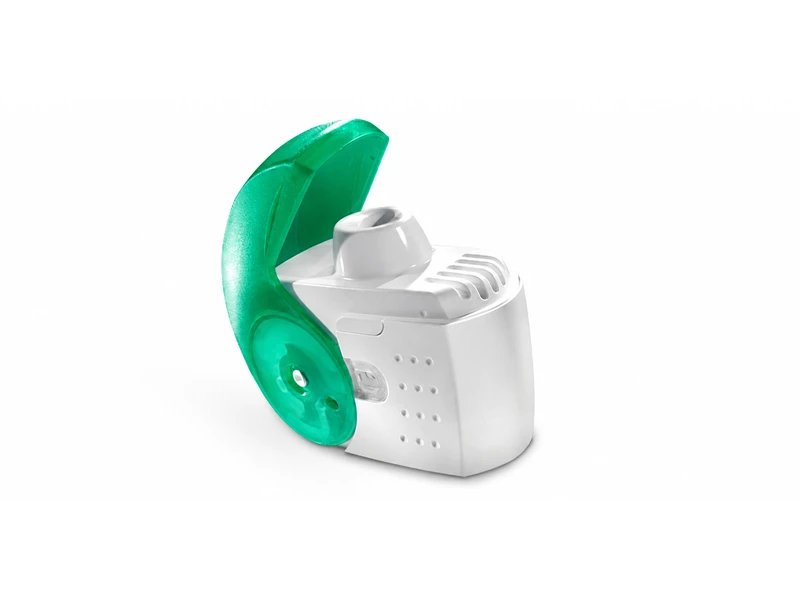
Device assembly locates the closed reservoir and the metering and housing components. Joining and positioning checks follow the device drawing, while functional tests evaluate the mechanism with the formulation.
Colour or code checks can identify the specified visible version or mark. Their purpose and coverage are defined separately from powder-fill and device-function checks.
Containment includes powder supply, dosing, rejected units and cleaning. Ventilation contributes to that arrangement, but exposure control depends on the complete design and operating tasks.
Development dosing establishes formulation and tool behaviour at the selected charge. Production feeding, replenishment, cycle timing and environment still need their own assessment.
03 Powder-path access and measurement care
Residue and wear at the dosing outlet, reservoir rim and closing tools can affect both charge and assembly. Cleaning and maintenance are followed by checks of powder release, measurement references, rim cleanliness and the specified closing result.