Read details

Conveying conditions influence particle stress and segregation. Dense-phase transfer can be considered where lower gas velocity is useful, but product preservation must be demonstrated with feed and discharge samples.
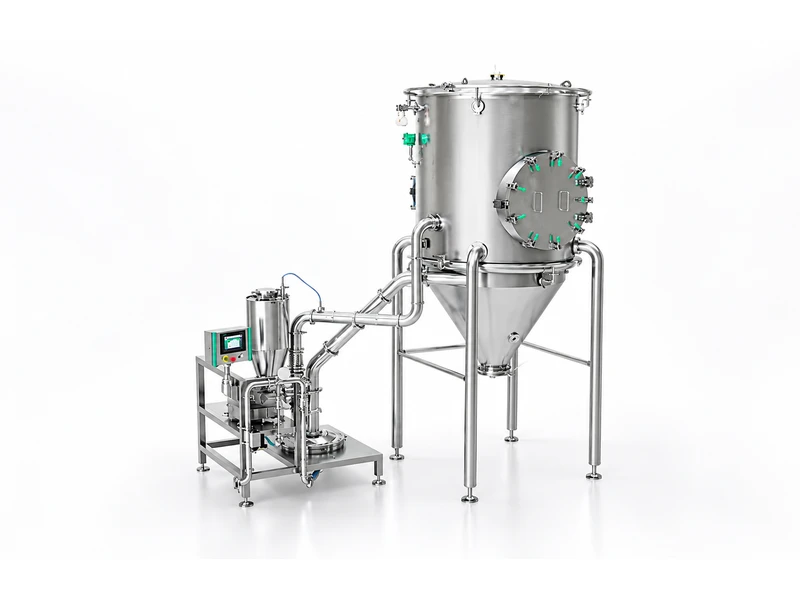
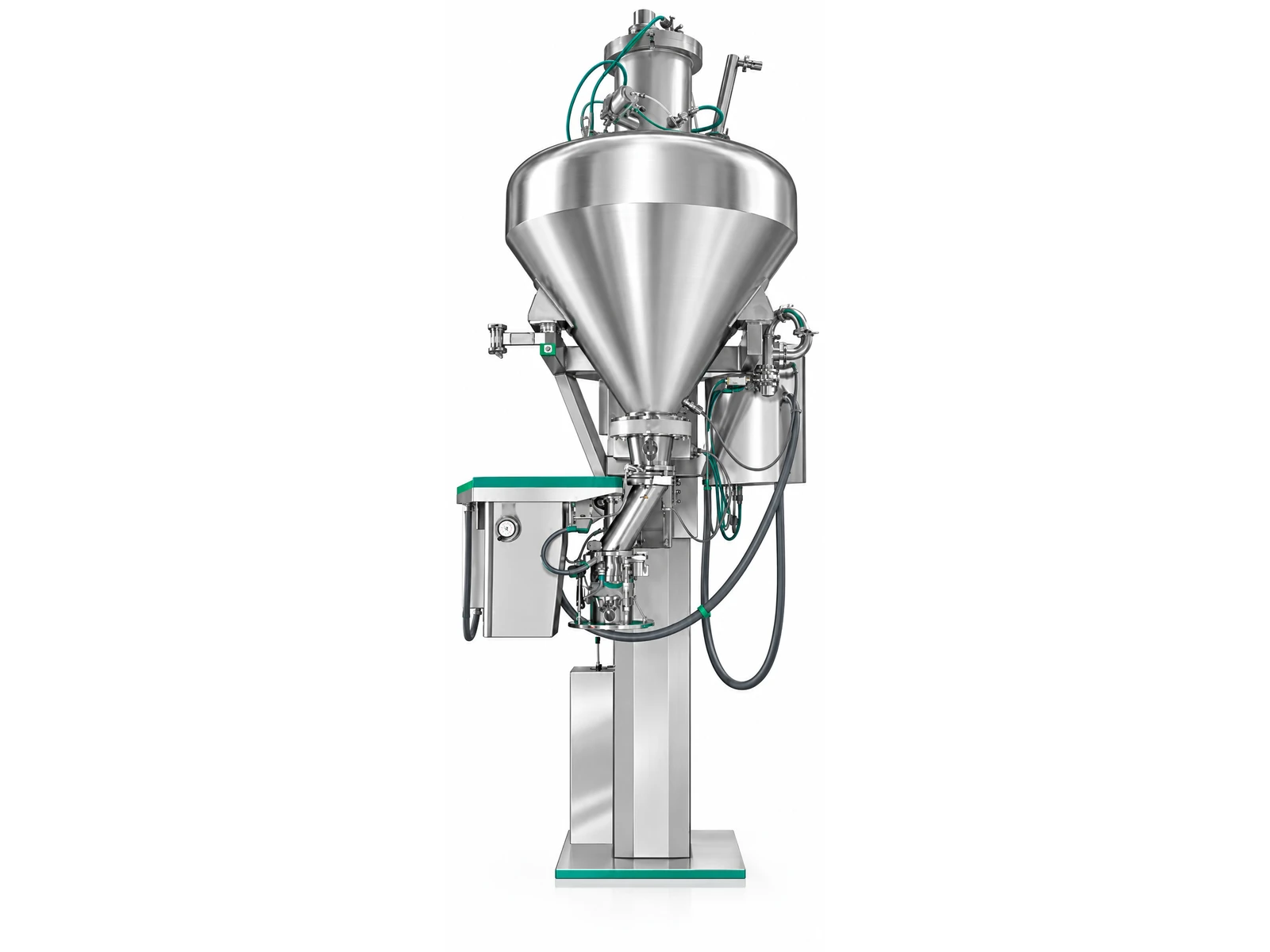
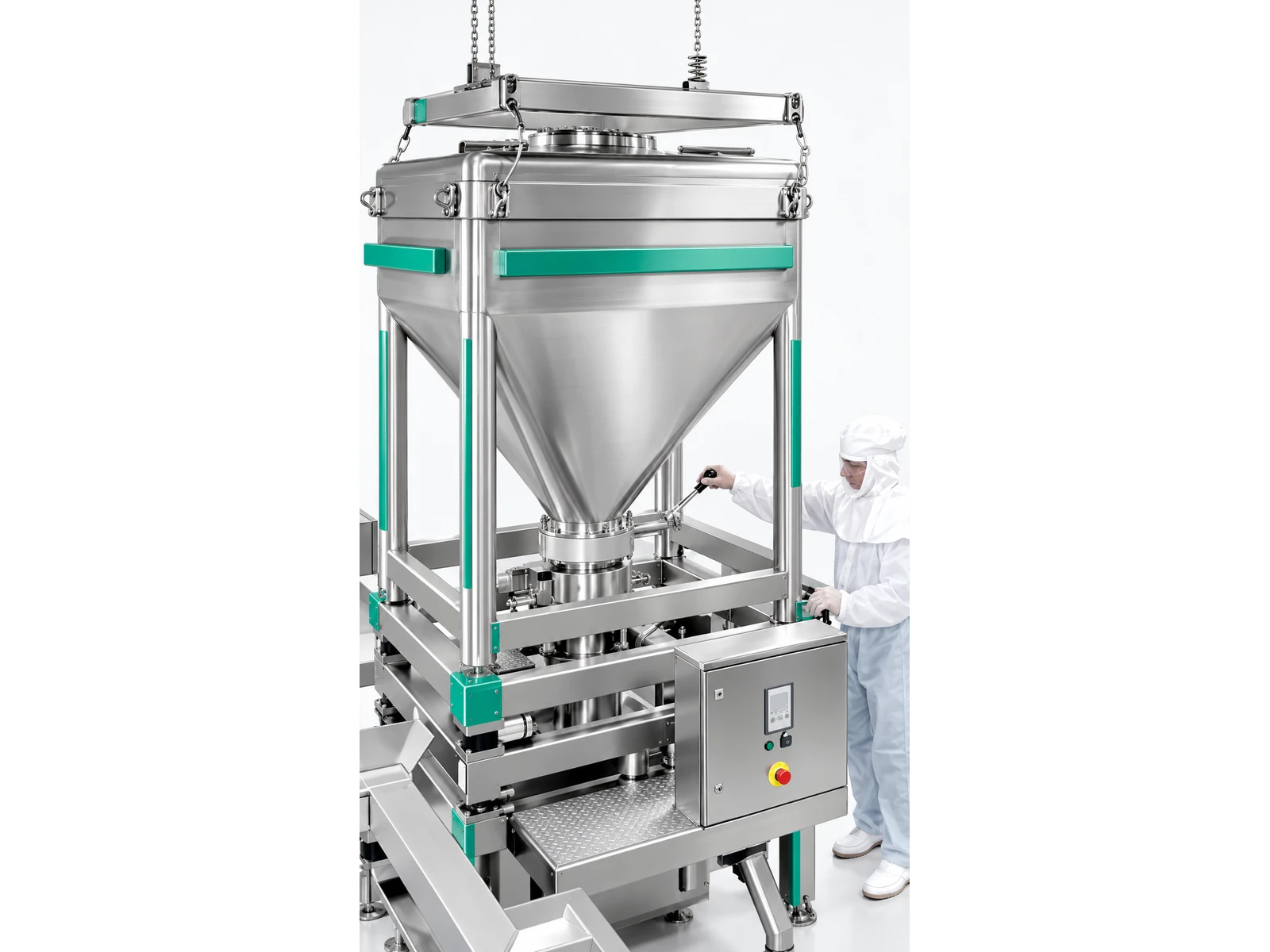
A closed transfer path reduces the need for open tipping and can connect equipment without relying only on gravity. The achievable distance and lift depend on the route, powder and supplied system.
A cohesive powder can blind the receiver filter. Compare pressure drop and discharge recovery before and after a cleaning pulse with the proposed membrane.
Low conveying velocity does not eliminate ignition risk or establish a containment limit. Combustibility, electrostatic behaviour, exposure targets and site classification must inform the complete system design and test plan.
Solvent-wet powder introduces gas and vapour considerations in addition to dust. Any inerting strategy requires defined control and measurement; it must not be inferred from the presence of vacuum transfer.
Cleaning reaches the receiver, filter, valves and line only through the arrangement actually supplied. Drainage, residue removal and drying need verification; CIP or SIP is a separately specified function.
Pneumatic blending is a separate process scope from transfer. Recirculation may redistribute components, but blend uniformity and particle changes must be evaluated using a defined sampling method.
For a low-dose blend, define how each powder enters the receiver and where samples are taken. Compare blend uniformity before and after discharge using the site's sampling plan.