

Define the equipment scope
Sample availability, target size and recovery from the cyclone and filter govern the trial arrangement.
Learn moreProcess expertise. Chinese manufacturing. Global perspective.

Equipment & technology
Investigate micronization on a small powder charge using a laboratory jet mill. Compare the feed and collected particle-size distributions while tracking material retained in the feeding, milling and collection path.
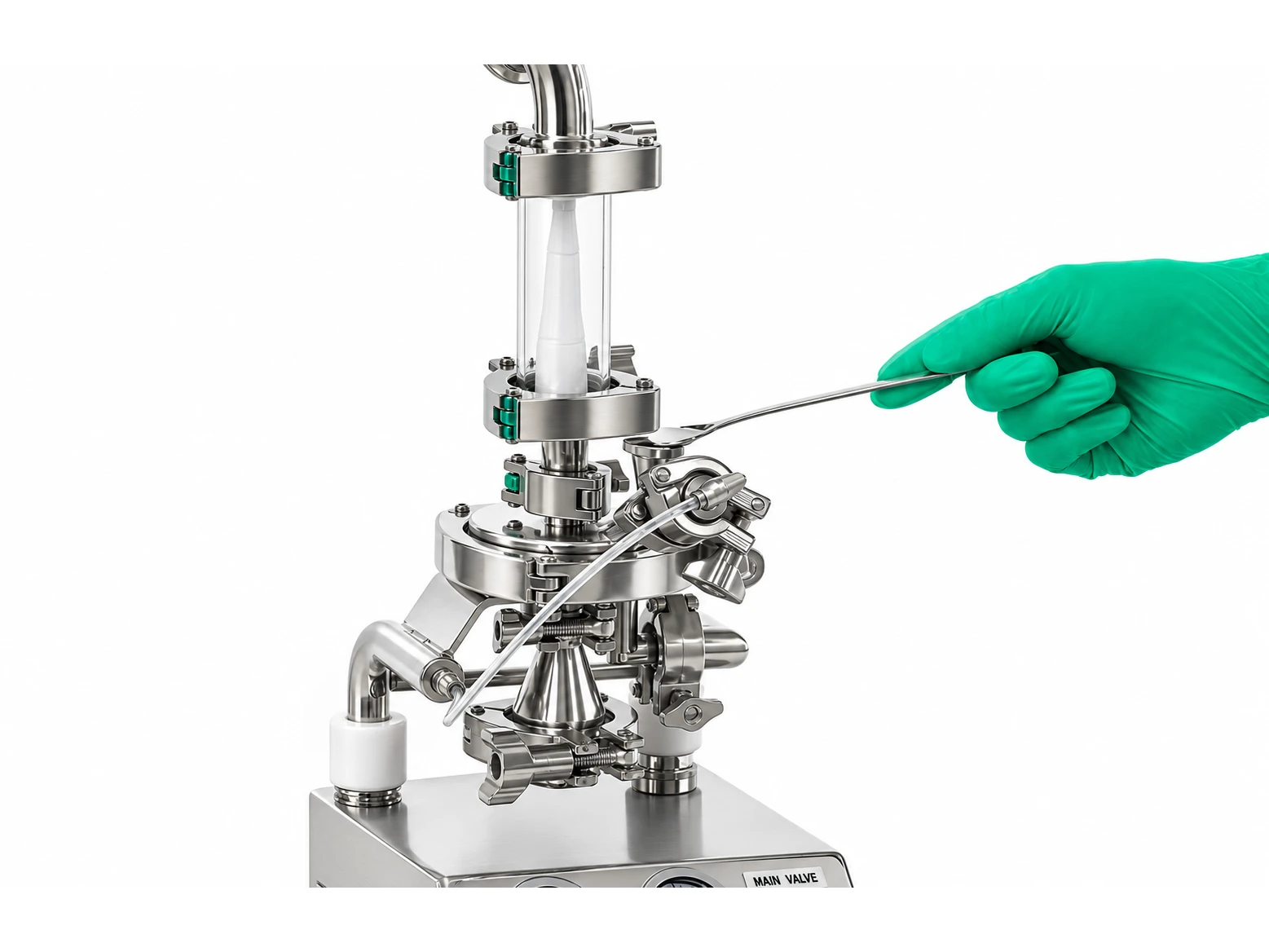
Gas-driven particle motion provides the size-reduction mechanism. Trial design starts with the powder properties, initial particle size, target distribution and available material. Identify the mill and collection arrangement before setting the gas conditions or committing the complete sample.
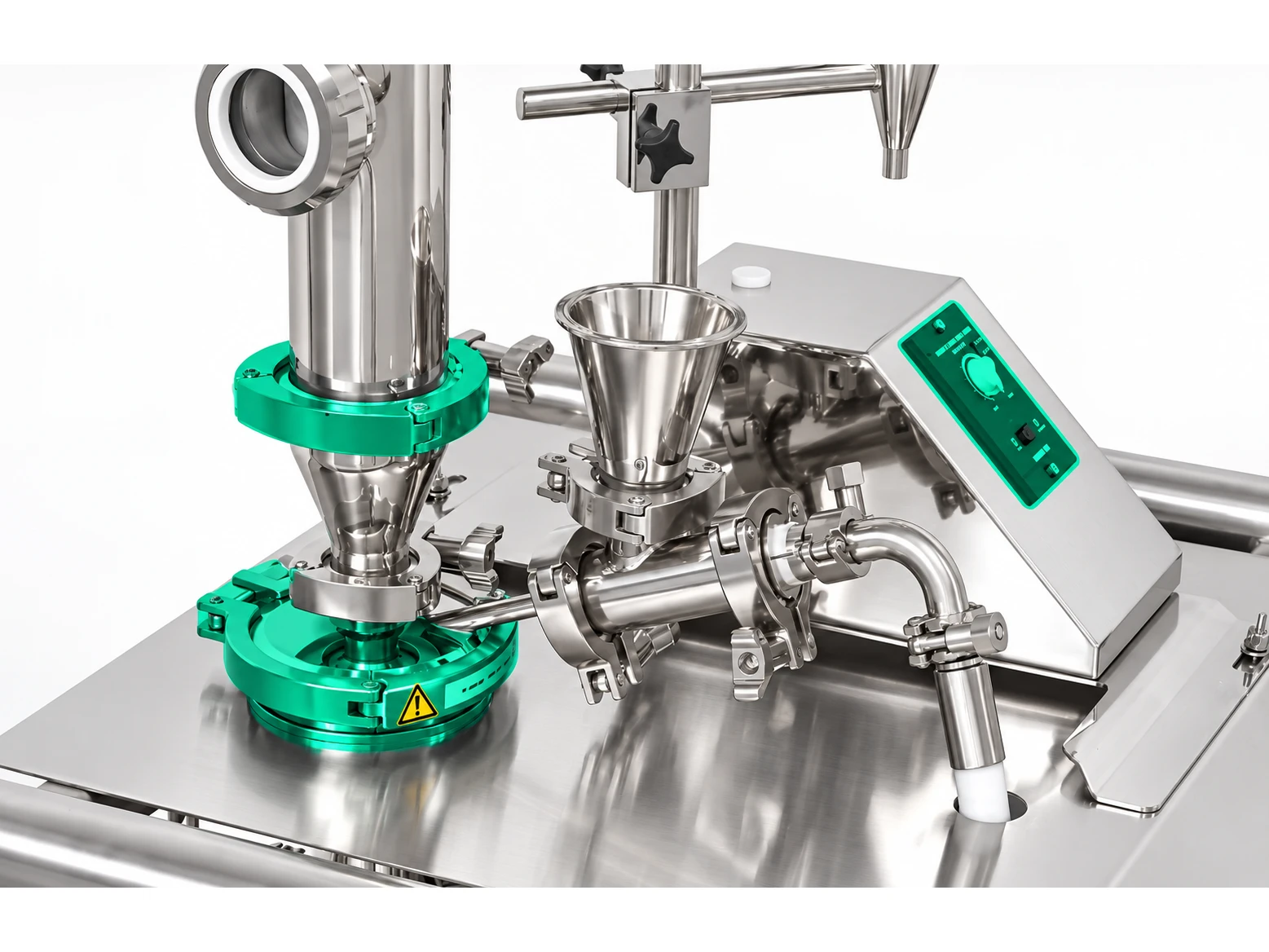
Example project input
Weigh recovered material on the same basis as the charge. Compare particle-size data separately; mass recovery alone does not demonstrate a finer cut.
200 g
Powder charged to a lab trial
160 g
Powder collected after milling
80%
Collected mass recovery
—
Process options
A fine collected fraction is only part of the result. Assess how much usable material is recovered, where residue remains and whether the measured distribution represents the complete trial. Keep setup and analytical samples distinct in the material balance.
Confirm the feed method, milling-gas supply, product-contact surfaces and collection filter for the proposed powder. Review moisture sensitivity, dust behaviour and cleaning access with the selected configuration; the name jet mill does not define these details.
Use a consistent particle-size measurement and sample-preparation method before and after milling. Record feed rate and gas conditions against collected fractions so results can be compared without confusing a collection change with a milling change.
Use these inputs to define the proposed configuration. Confirm operating values against the selected model and trial conditions.
| Project input | What to record and why |
|---|---|
| Trial charge | Weigh material available for the trial and reserve quantities for setup, sampling and recovery. Compare recovered output to the input charge. |
| Feed particle size | Provide the initial particle-size distribution and sampling method. This is the baseline for evaluating size reduction. |
| Milling gas | Name the proposed gas and available connection conditions. Confirm compatibility with the material and the selected collection system. |
| Product collection method | Identify filters, receiver and transfer route. Weigh recovered material separately from sampling, fines and retained residues. |

Take a representative feed sample, keep the analytical method fixed and collect output against recorded operating intervals. Compare the full particle-size distribution rather than selecting only a single reported size.
Weigh collected powder and record analytical samples and retained material separately. Inspect the feed path, chamber and collection filter during cleaning; unexplained retained powder changes the usable yield of the trial.
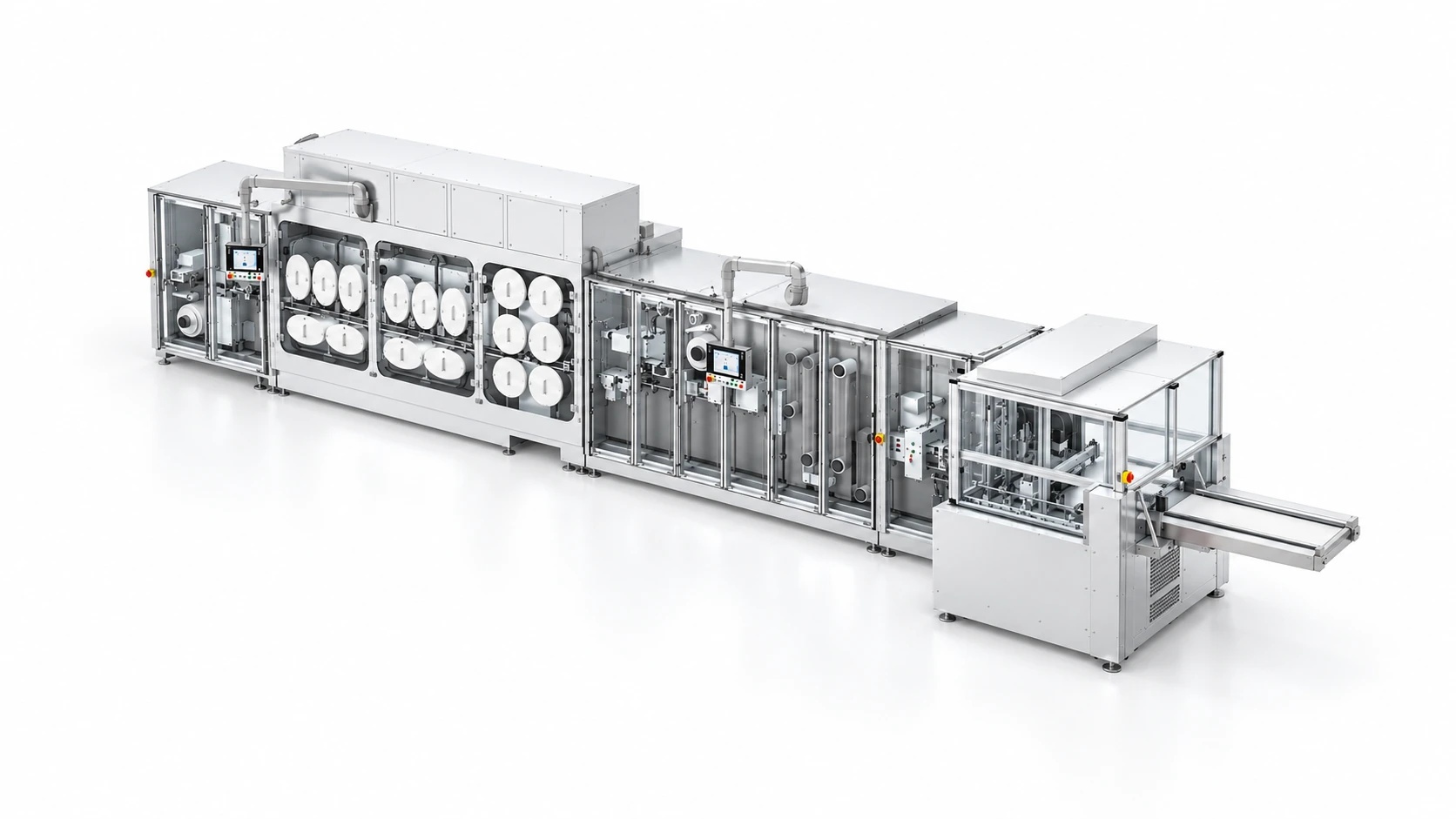
Production line · Equipment context
Explore the process areas on the production line associated with this equipment.
The map shows the blister-metered branch. Capsules and reservoir devices use different filling and assembly paths. The line provides process context; the individual product is not identified as a separate station in this view.
Related production lines: Dry Powder Inhalation Manufacturing Lines
Supply characterized powder to the mill, then collect and label the milled fractions before blending, compaction or a dosage-form study. The displayed inhalation packaging route is downstream context and does not represent a jet mill or its collection equipment.
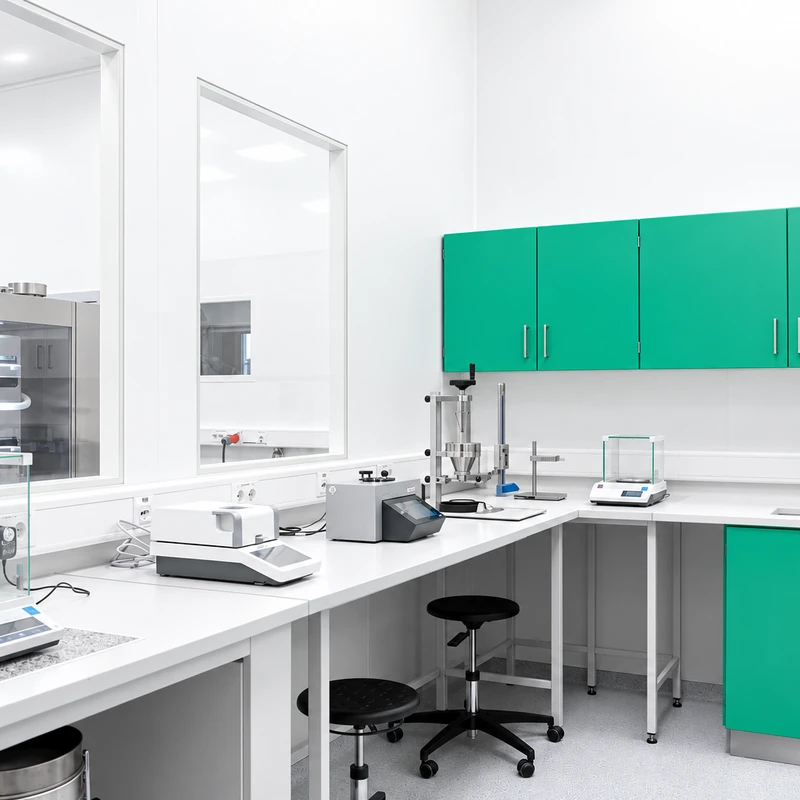
Sample availability, target size and recovery from the cyclone and filter govern the trial arrangement.
Learn moreMeasure recovered mass and particle distribution after each run and record cleaning losses.
Learn moreIdentify the contact parts and format tooling for Jet Micron Mill. Agree access for cleaning, the spares to hold and the operating records the site will need.
Learn moreShare trial charge, feed particle size and milling gas.
Request product information
2 resources
The response depends on the material, feed and selected milling arrangement. Agree a measurement method and acceptance distribution, then evaluate representative powder before fixing performance commitments.
State the proposed gas, its quality and available supply conditions. Compatibility and safety must be assessed for the powder and collection system; a laboratory footprint does not remove those requirements.
No. Recovery describes mass balance. Particle distribution and any formulation-specific quality attributes must be evaluated separately.
For a configuration review, include trial charge, feed particle size, milling gas, product collection method.
Discuss your project

