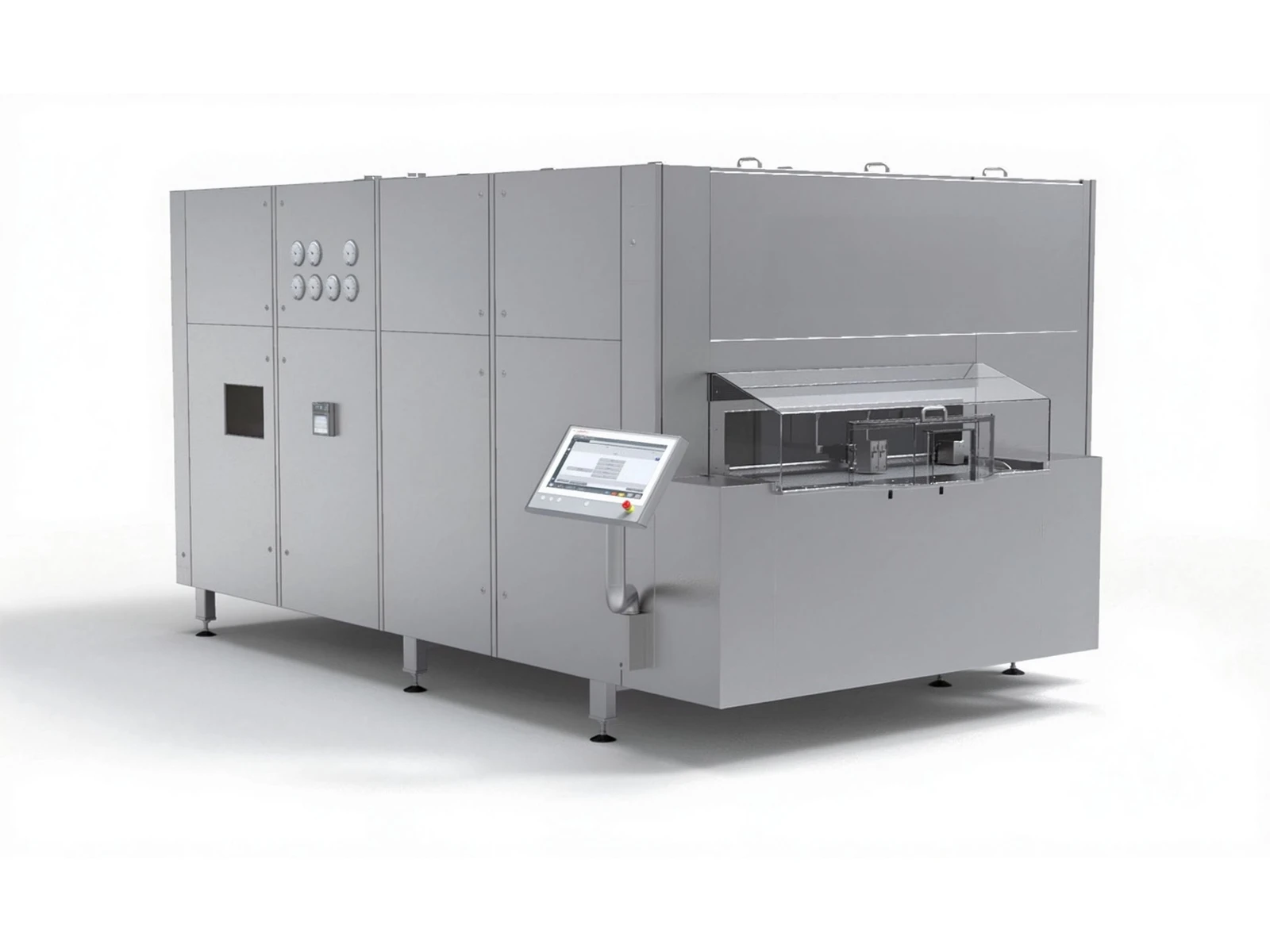
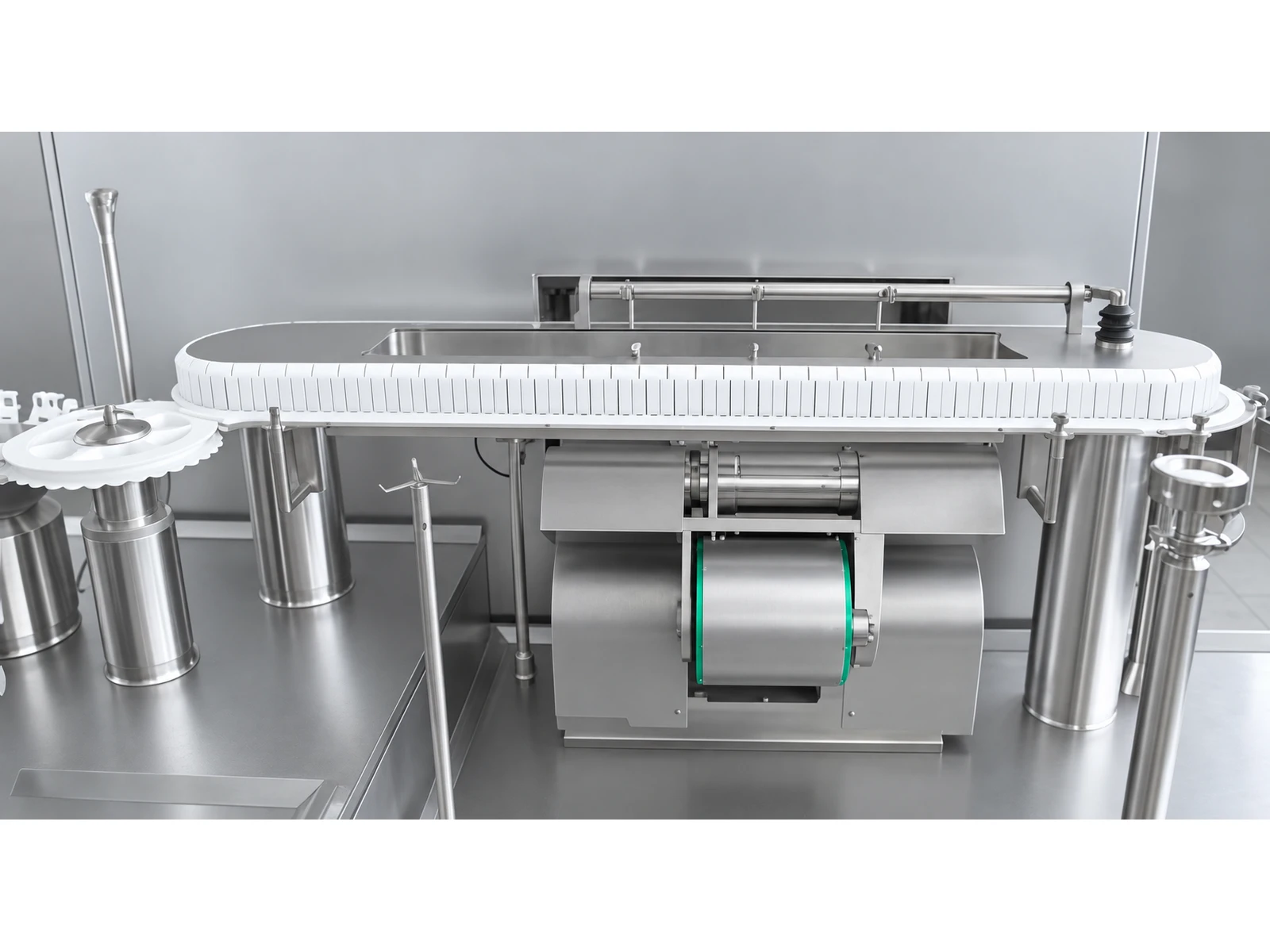
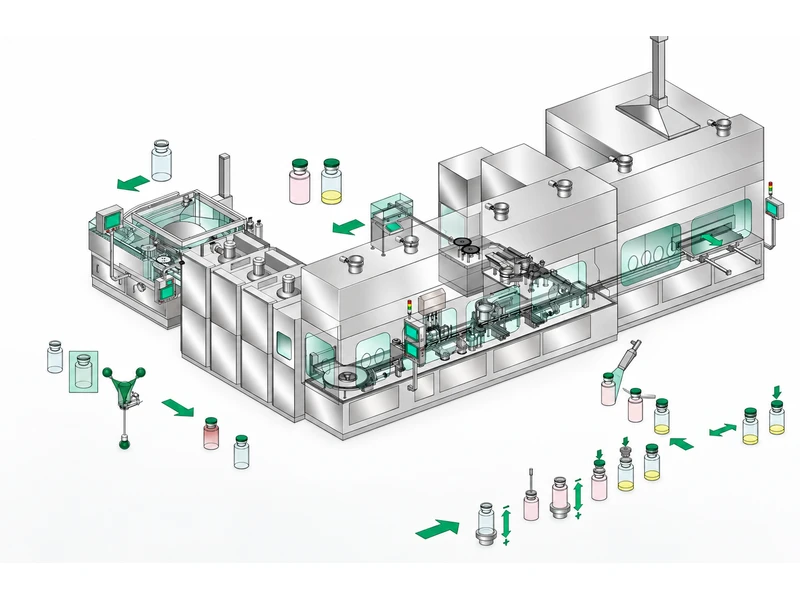
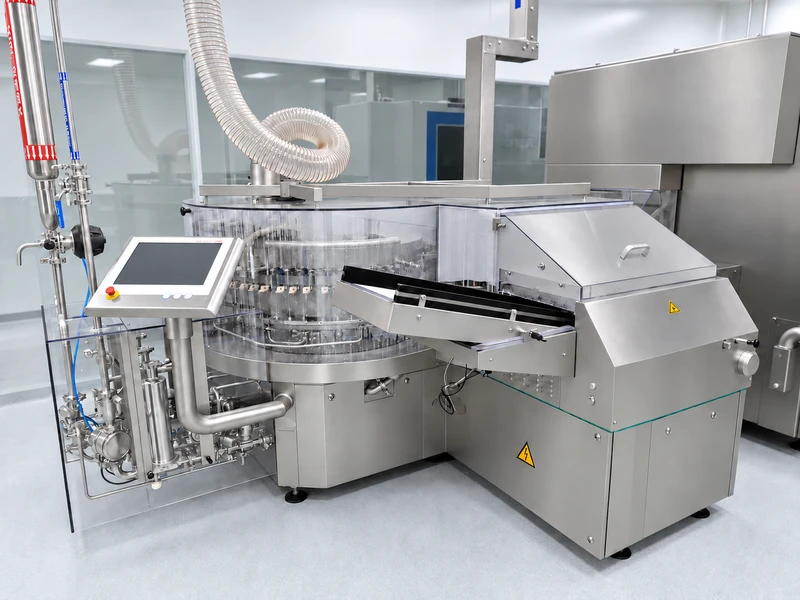
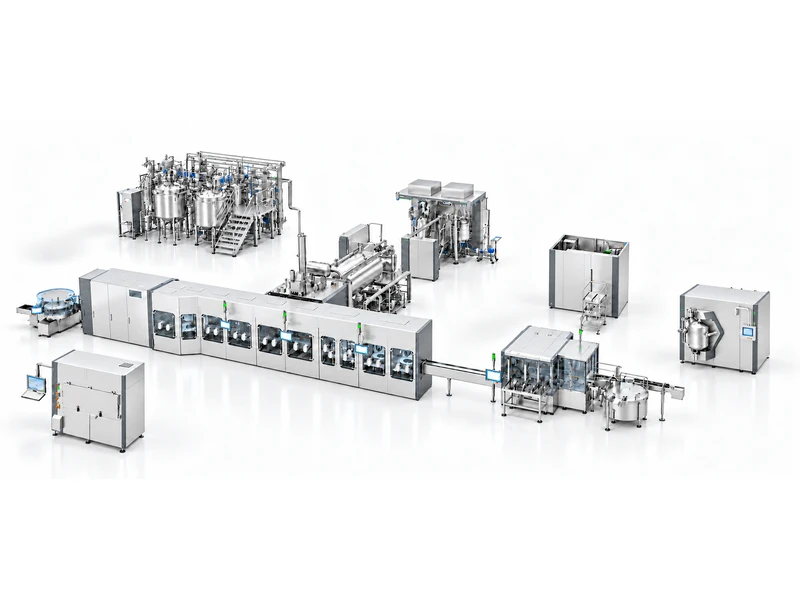
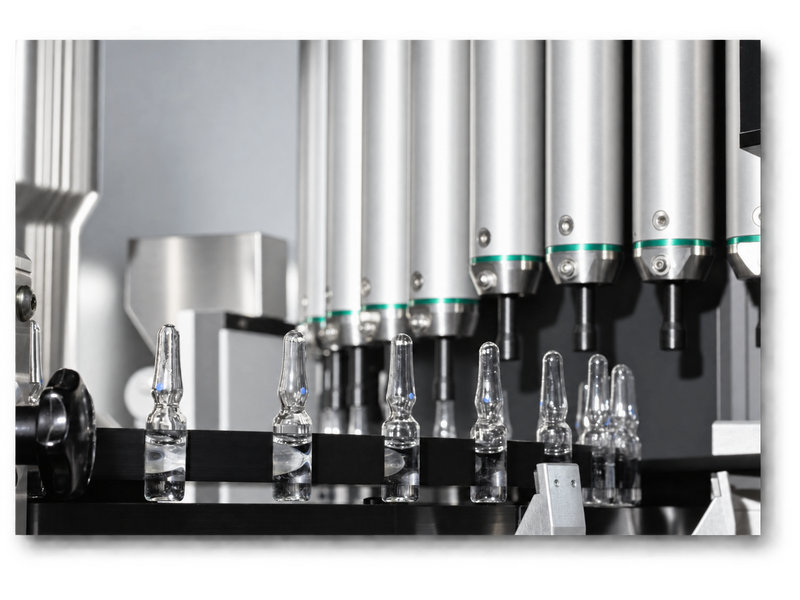
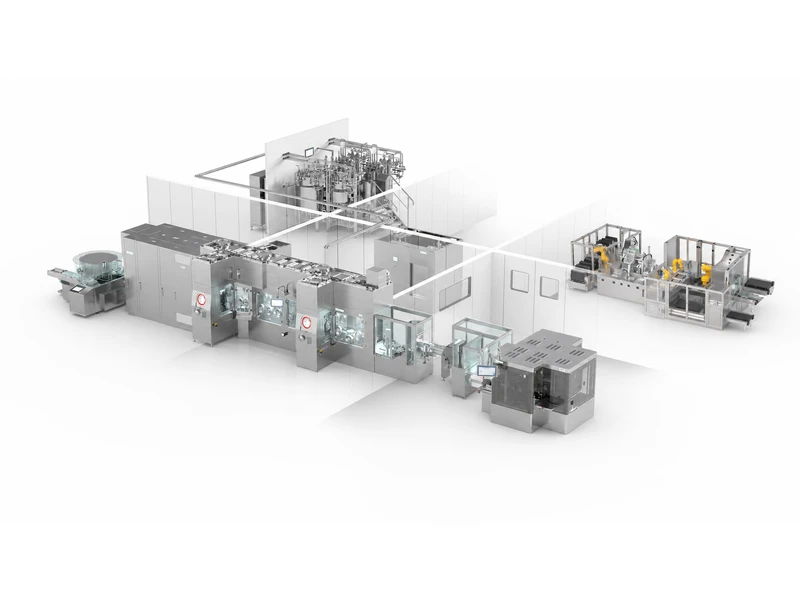
01 Upstream container washing Washer
Confirm the washing process for the container entering the dry-heat tunnel.
Read more
Before dry-heat treatment, define the washing process for the selected container. Confirm the rinsing and spraying sequence, media quality, drainage and handling parts. Review media separation and the transfer interface with the tunnel for the intended production arrangement.
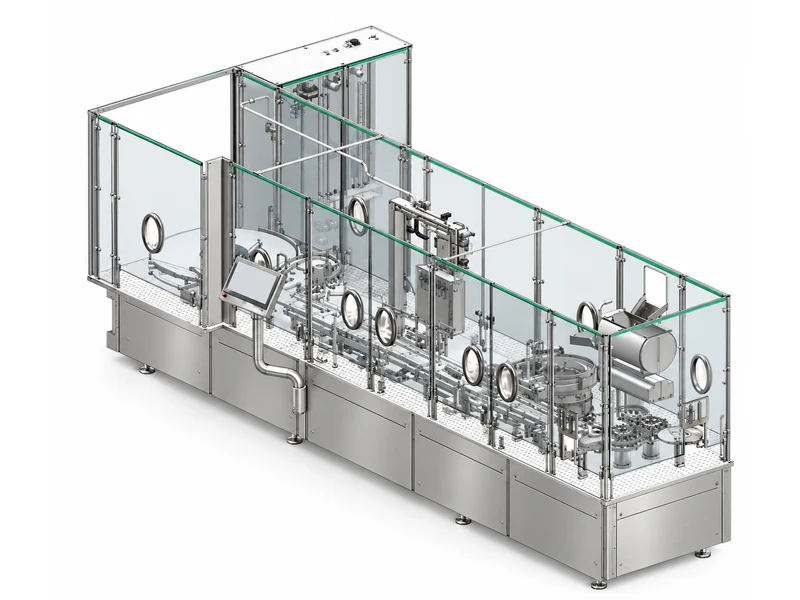
Filler
Read more
Dosing selection — Select the filling method from the product properties, dose range and container. Confirm the pump or pressure-dosing arrangement and format parts for the proposed machine.
In-process control — Specify the weighing coverage, reject handling and feedback functions. If 100% container weighing is required, confirm the achievable rate for the selected fill volume and product.
Product recovery — Define the start-up, batch-end and changeover procedure. Measure residual product and establish whether recovered material may be reused for the intended process.
Headspace oxygen — For oxygen-sensitive products, specify inert-gas flushing before stoppering. If residual oxygen ≤0.5% is required, agree the measurement method and acceptance criterion for the actual container and formulation.
Cleaning and sterilization — Define the product-contact boundary and the required cleaning or sterilization method. Confirm which parts are included in any proposed CIP/SIP cycle and how coverage is demonstrated.
Controls and records — Specify recipes, access roles, audit trails, electronic signatures and batch records where required. Agree the automation tests and site qualification scope for the supplied configuration.
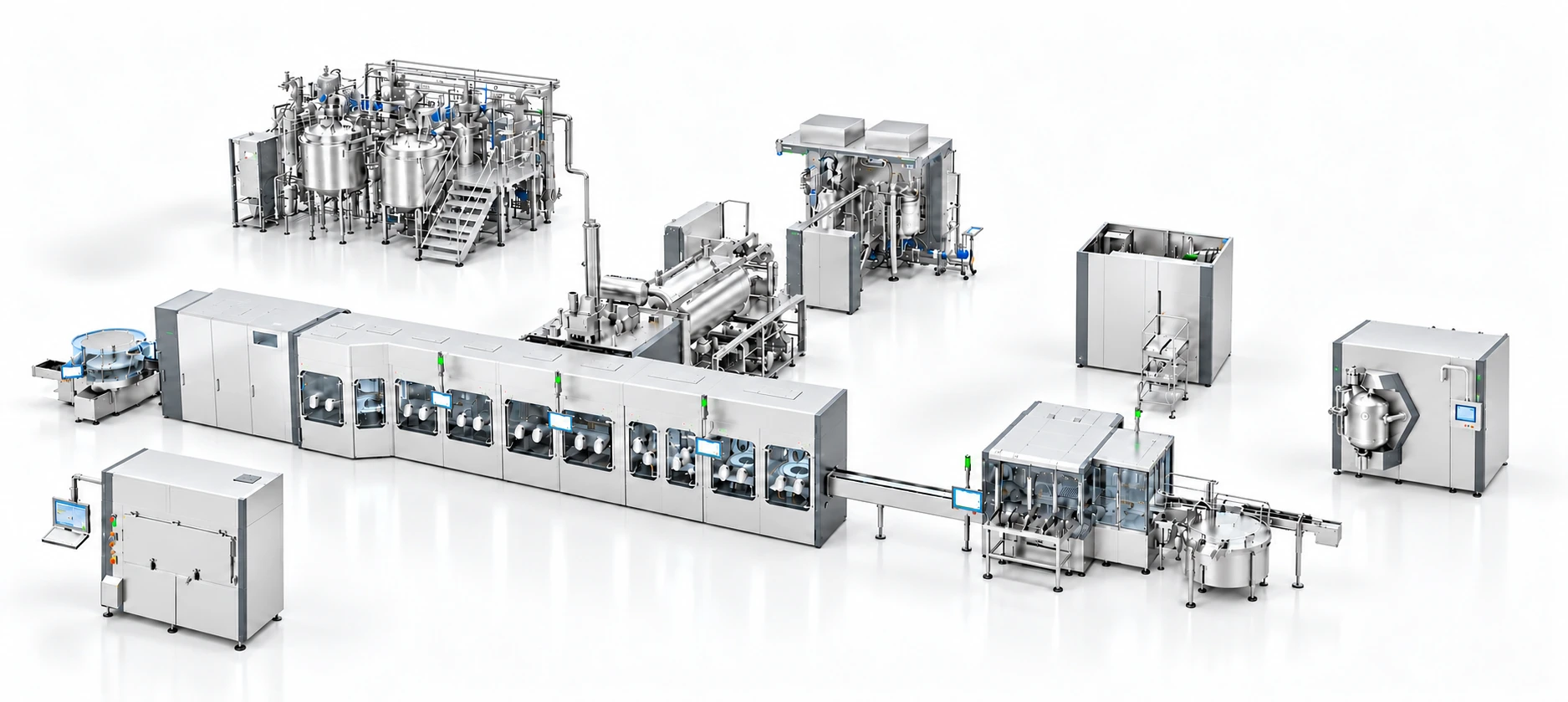
Vial crimping and line interfaces
Confirm the vial, stopper and cap combination and the required crimping rate.
Read more
Crimping setup — Confirm the vial, stopper and cap combination, the available speed adjustment and the required line rate with the selected capper.
Process settings — Review which crimping parameters are adjustable, displayed and recorded on the HMI. Confirm any head-level force or pressure monitoring in the proposed configuration.
Closure checks — Agree crimp acceptance criteria for the actual vial, stopper and cap. Review visual checks and any separate closure-integrity test needed for the product.
Access and changeover — Review reject-discharge access, guarding, cleaning access and the tools or format parts required for changeover.
Container handling — Confirm the transfer method and operating speed using the intended vials. Check handling and closure condition during the line trial.
Visual inspection for the selected container
Select the inspection machine for the container format and product.
Read more
Inspection setup — Select the optics, container handling and rotation profile for the product and container. Confirm which surfaces and defect types can be assessed using representative samples.
Format changeover — Confirm the tooling and procedure for the selected container. For a vial inspection configuration using a 15-minute changeover target with two operators, verify this during the format trial.
Reject decisions — Define acceptance rules, reject verification and the handling of uncertain results. If re-inspection is included, agree how units and results are identified and recorded.
Discharge interfaces — Confirm the routing and identification of accepted units, rejected units and samples, including the handoff to downstream equipment.
Installation requirements — Confirm the selected machine’s utilities, extraction requirements, footprint, service clearances and upstream and downstream interfaces.
Batch steam sterilizer option
A batch steam sterilizer is a separate equipment option. Define the load and packaging, then select the appropriate steam or air/steam process, loading arrangement and cycle acceptance criteria.
06 Autoclave chamber
For the separate batch sterilizer, specify chamber material (316L where selected), circular or square section, capacity within the listed 200–6,800 L range, and a mechanically polished internal finish of Ra < 0.4 µm. Confirm the loading arrangement for the chosen chamber.
07 Autoclave doors
For a batch steam sterilizer, review the chamber door and seal against the intended load. This is a separate equipment option from the continuous dry-heat tunnel.
08 Autoclave process control
For the selected batch sterilizer, confirm the listed four PT100 probes per chamber and the pressure-based control specification of temperature variation < 0.5 °C against the intended cycle and load. Agree the alarm list and cycle records for that configuration.