Assess vial filling with the intended liquid, container and stopper on a small-batch setup. The trial should measure accepted fills and material recovery from startup to shutdown, while confirming how the vial is supported and closed.
Process context · Two closed glass vials presented for visual inspection
01 /
Vial Filler
Describe the product behaviour, target dose and smallest available batch together. A short product path may reduce hold-up, but its compatibility, priming procedure and metering performance still need to be checked with the actual liquid.
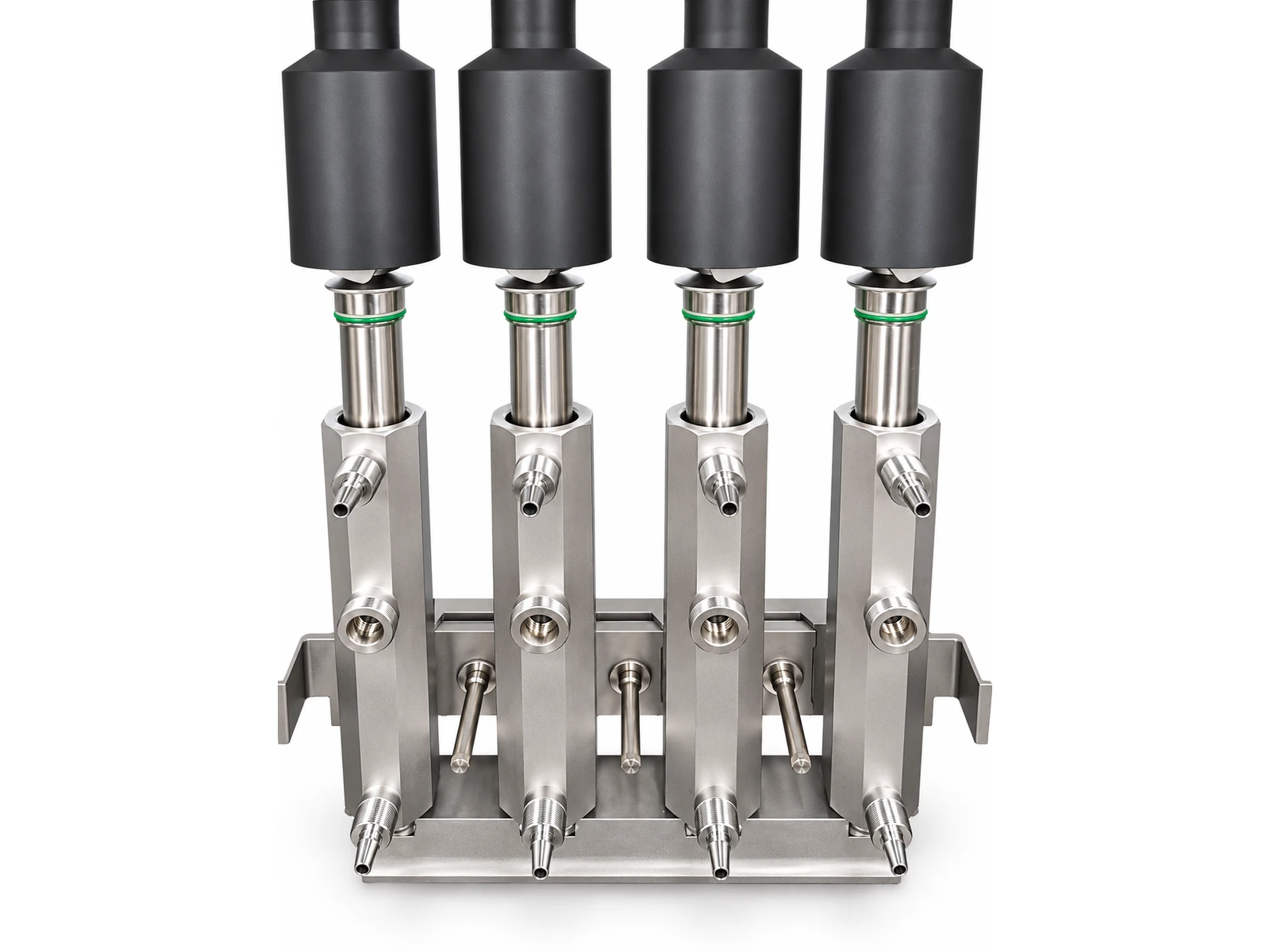
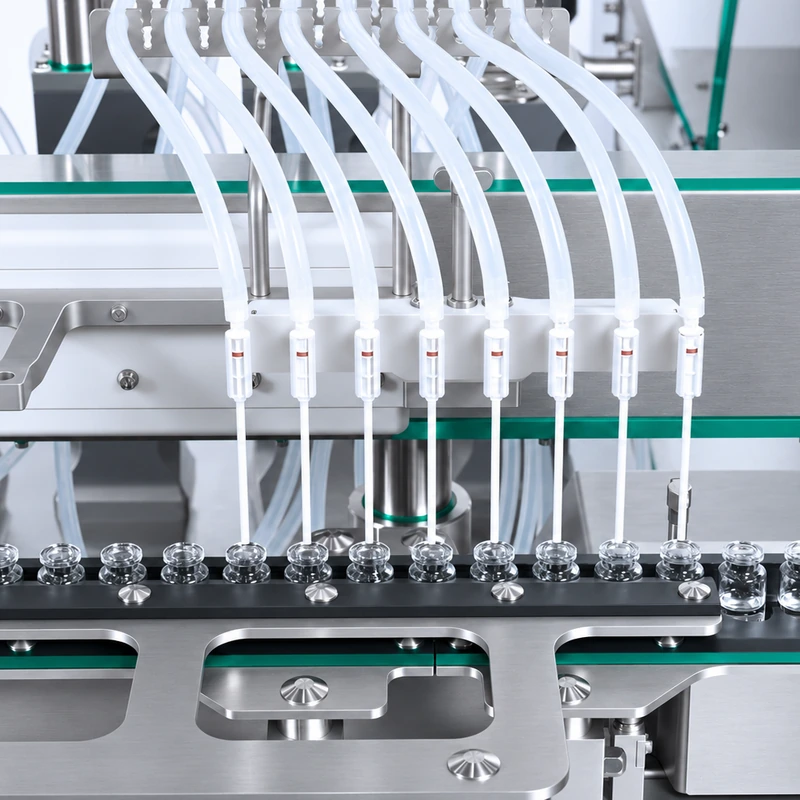
Process context · Four dosing heads above a row of glass containers
Example project input
Measure priming volume and residual hold-up on the bench fluid path before committing a scarce development batch.
120
Vials in a bench trial
2 mL
Nominal fill per vial
240 mL
Liquid in the trial vials
—
Process options
Filling technologies
Filling technology
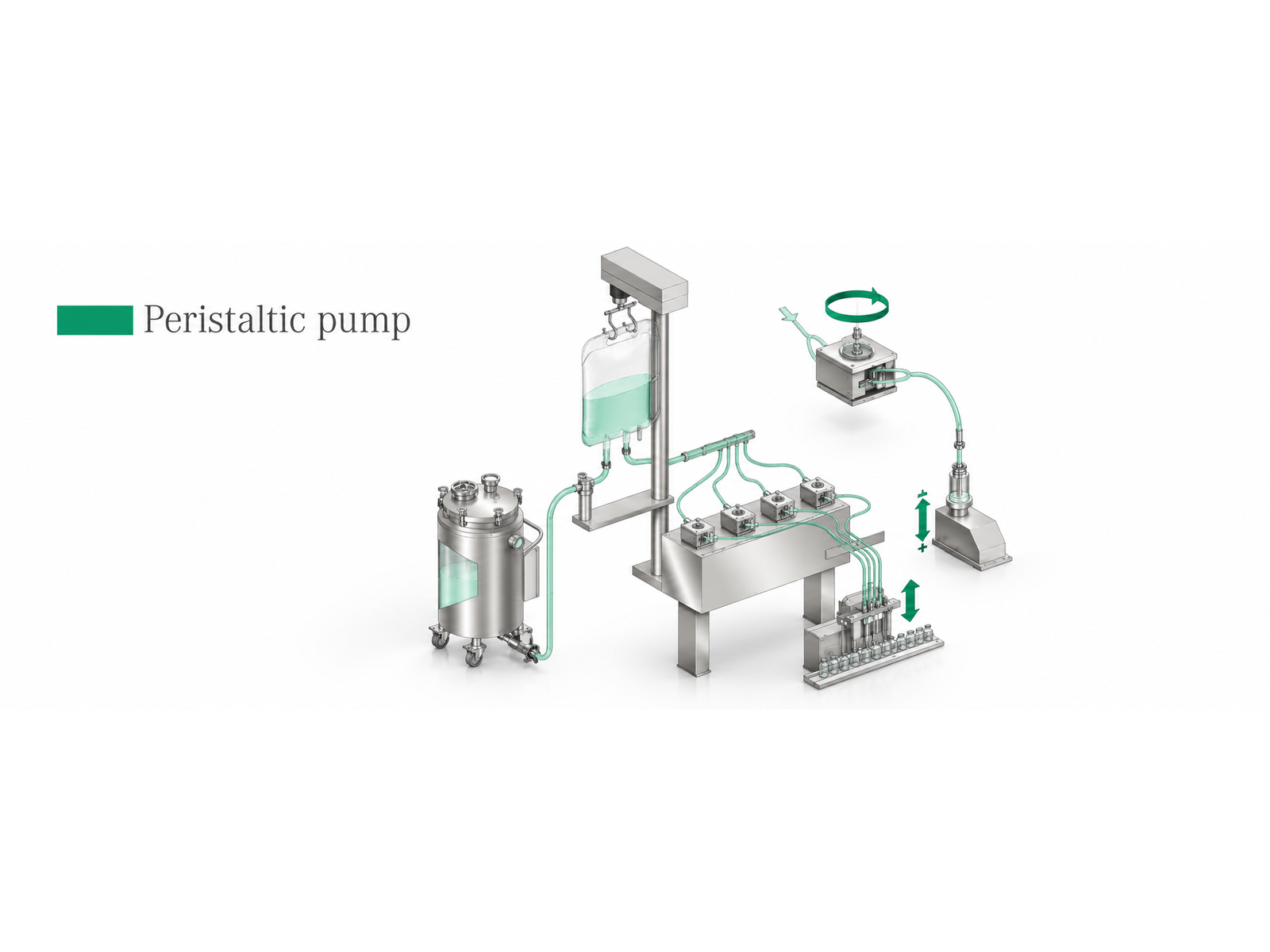
Peristaltic pump
A flexible tube carries the liquid while rotating rollers control dosing. The product contacts the tube rather than the pump mechanism. This principle is used when a disposable product path and gentle handling are priorities. Tubing selection, product compatibility and the changeover procedure should be reviewed for each application.
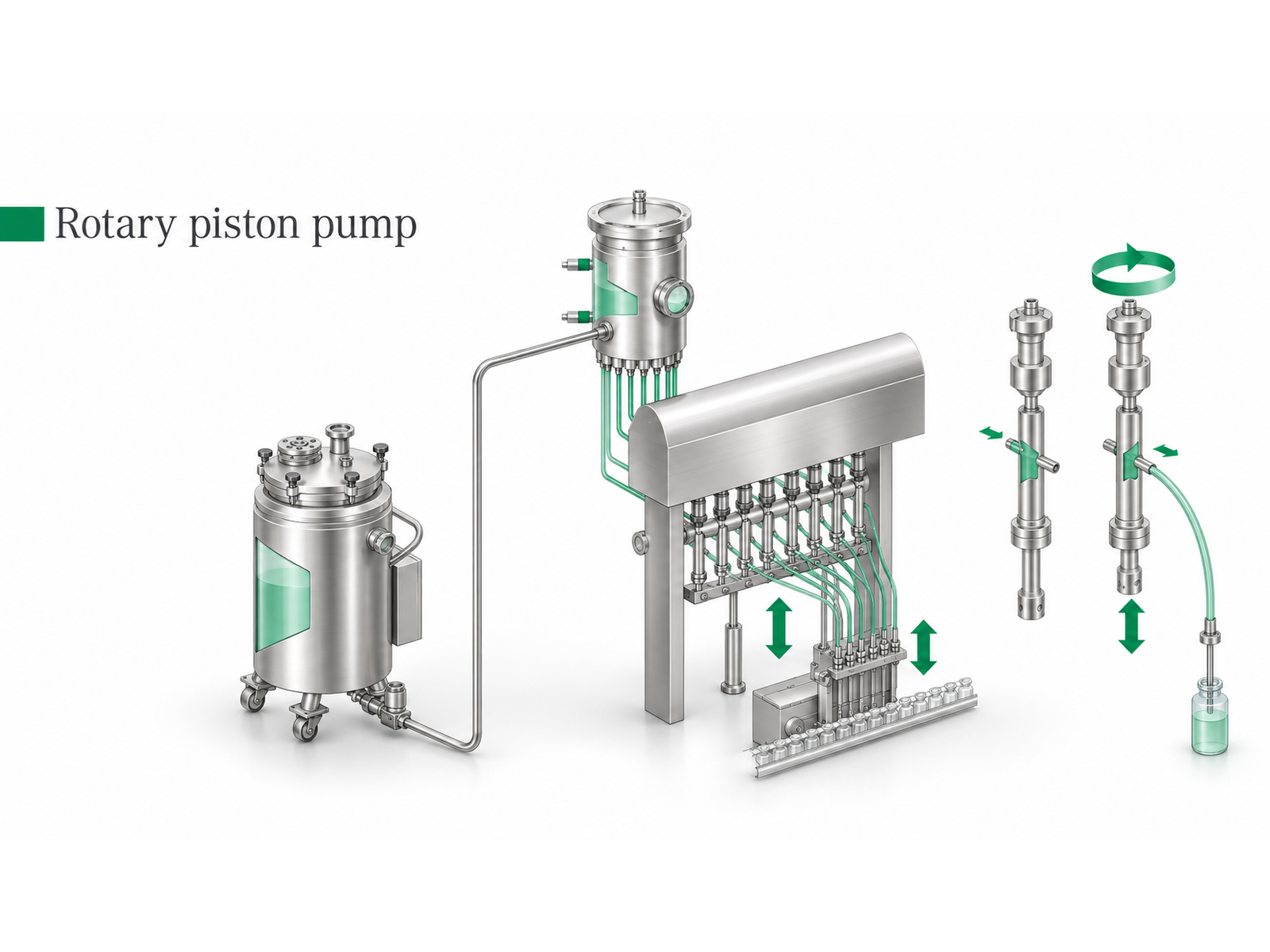
A piston draws liquid into a cylinder and then dispenses a measured volume through the outlet. The selected piston, valve and product-contact materials determine the application range. Review viscosity, cleaning requirements and the required filling volume together with the product and container format.
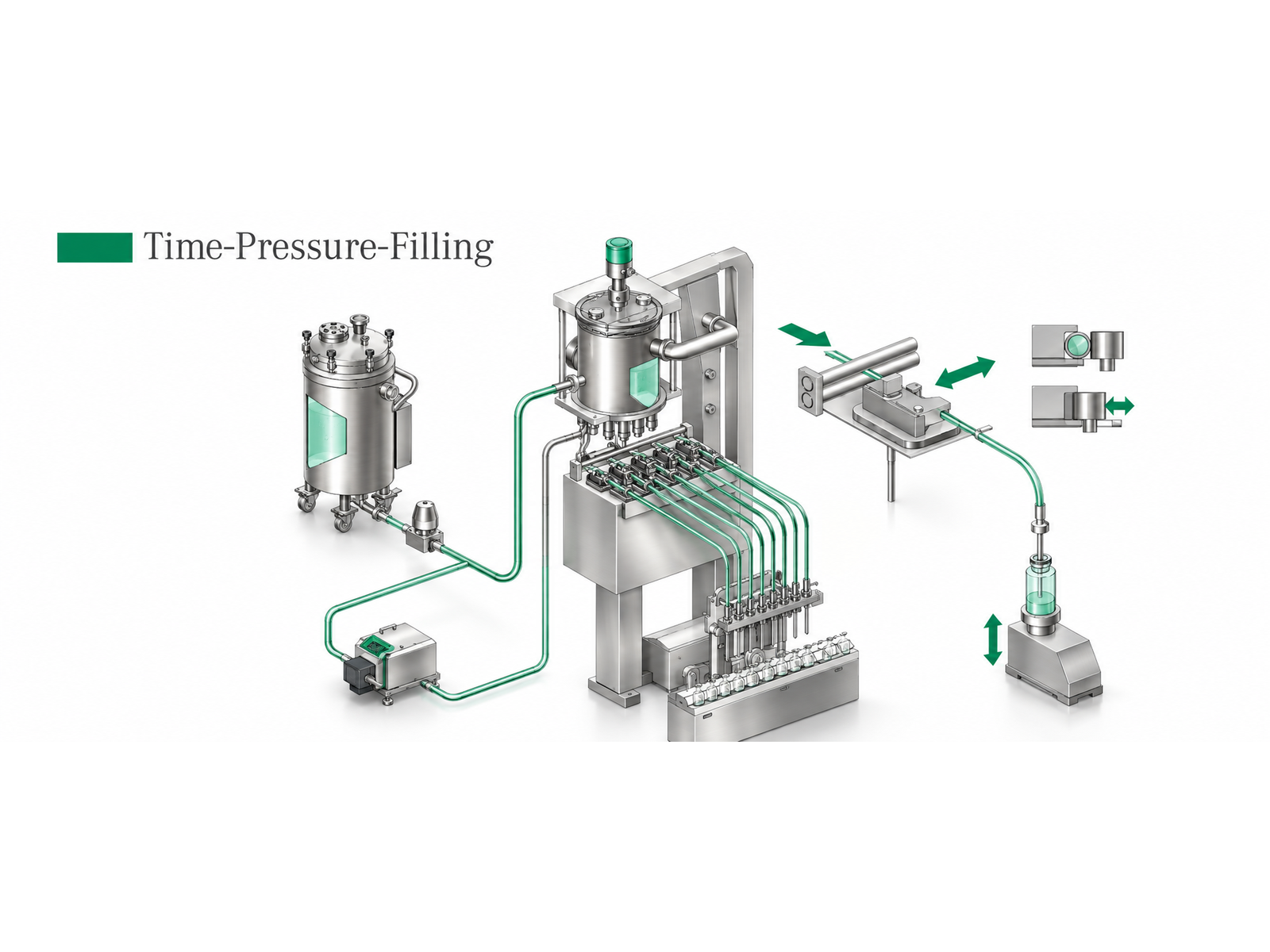
Controlled pressure moves liquid through a filling valve. The opening time and supply conditions determine the dispensed quantity. Product properties, pressure stability and the valve configuration are evaluated together when setting up the filling process.
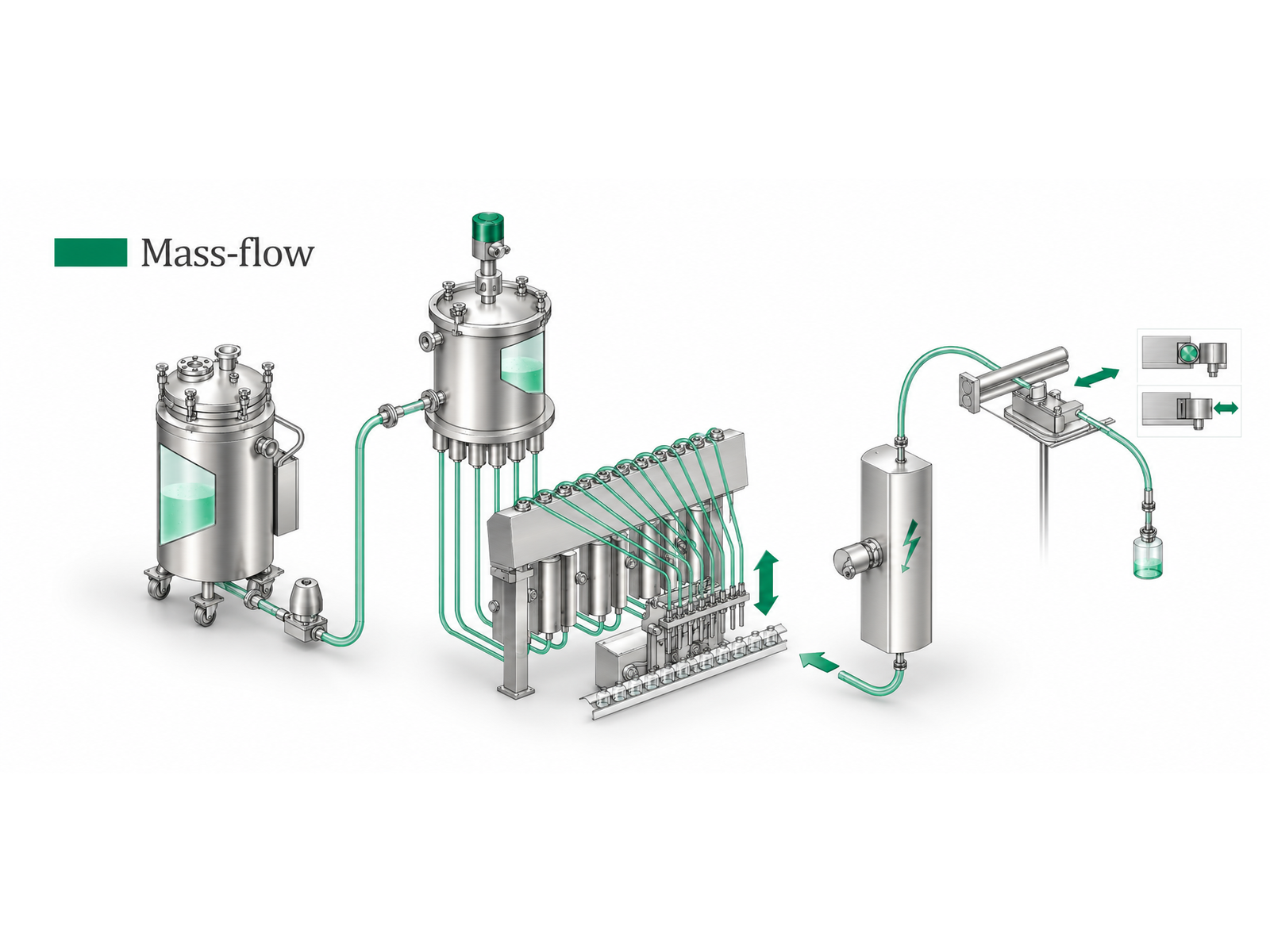
A flow sensor measures the product passing through the filling path and provides feedback to the dosing valve. The process is evaluated around the required fill mass, product behaviour and cleaning strategy. Sensor selection and the control sequence depend on the application.
For scarce development material, calculate the liquid required for accepted vials separately from setup, samples and residue. Examine end-of-dose dripping, foaming and the first and last accepted fills instead of relying on an average over the batch.
03 /
Technology & features
Specify the metering arrangement, tubing or other contact parts, filling needle and vial support. Confirm stopper handling and any separate capping step against the actual container-closure components.
Define the fill measurement and sampling plan, including density and temperature if mass is converted to volume. Review cleaning or disposable-path replacement and access to the holder and closing tools between formulations.
Process context · Four dosing heads above a row of glass containers
04 /
Applications
Use the equipment to study liquid dosing and container-closure handling before a larger filling trial. Aseptic or clinical use requires a separately defined environment, qualified operations and product-release controls.
05 /
Technical data
Use these inputs to define the proposed configuration. Confirm operating values against the selected model and trial conditions.
Selection inputs for Vial Filler
Project input
What to record and why
Available batch
Record the amount actually available for filling after preparation and sampling. Compare it with the volume needed to prime and empty the product path.
Vial and stopper
Supply the matched vial and stopper drawings and test samples. Check filling access, closure seating and handling after stoppering.
Product path volume
Measure the liquid needed to prime the feed tubing and dosing head, then the volume left at shutdown. Compare both with the available development batch.
Minimum accepted fill
State the smallest acceptable dose and the test method that can resolve it. Verify it by measuring filled units, not by reading pump travel alone.
How it works
How should dose delivery be checked at startup?
Prime the agreed product path, establish needle position and verify fills using the chosen tare method. Record the material consumed before the first accepted vial and keep these units separate from the evaluated run.
How is the useful trial yield determined?
Reconcile accepted vials, sampling, rejects and liquid remaining in the feed path at shutdown. Compare fill variation across the run and inspect or replace the contact parts before the next product.
Production line · Equipment context
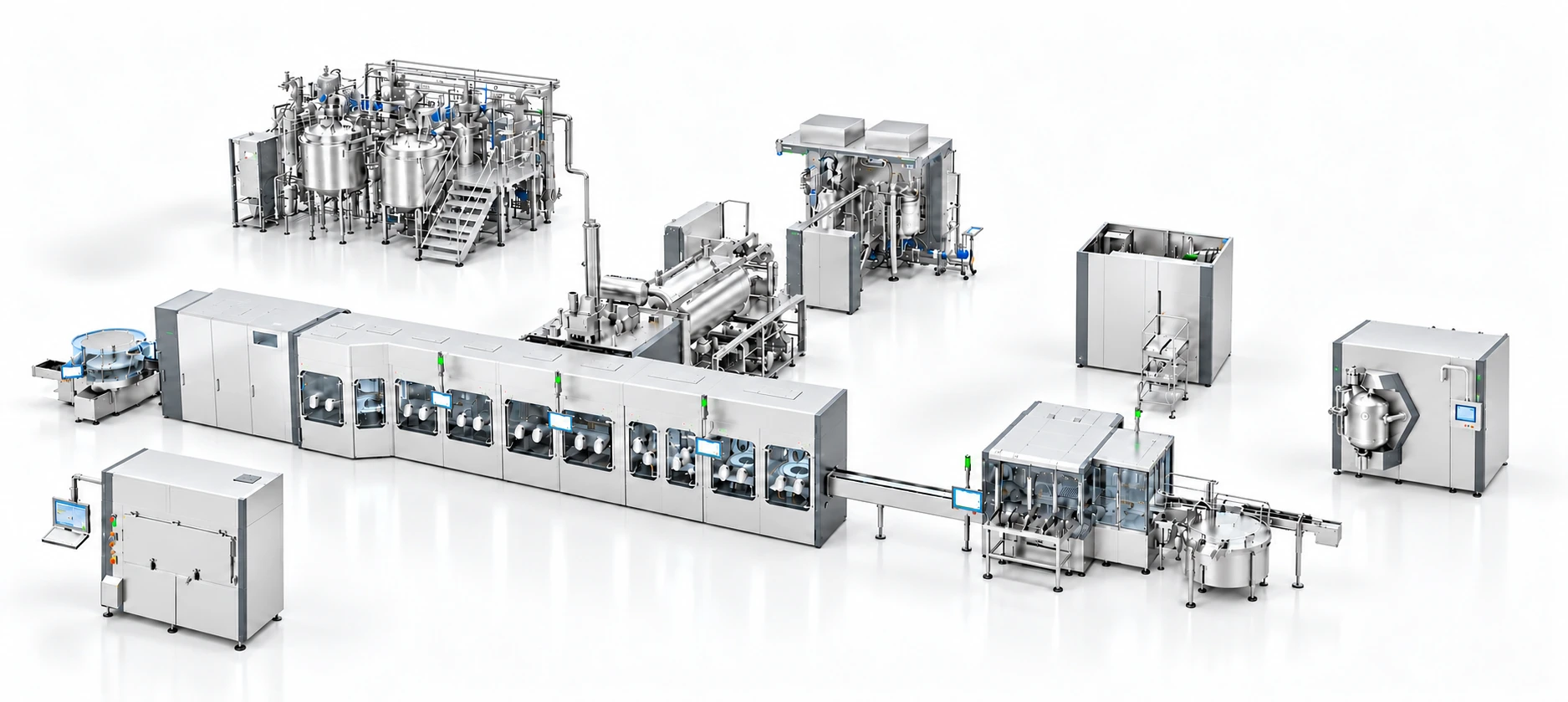
Liquid vial preparation and filling
Explore the process areas on the production line associated with this equipment.
Selected process route8 equipment areas · Scroll to explore
Follow the preparation, washing, tunnel and vial filling stations. The separate drying equipment serves lyophilized presentations. The line provides process context; the individual product is not identified as a separate station in this view.
Receive liquid and components in the specified condition, then pass identified filled vials to the required closing, inspection and formulation tests. Record whether stoppering and capping are manual, integrated or separate equipment operations.
06 /
Services
Define the equipment scope
For limited batches, priming volume and the amount left in the line can matter as much as running speed.
Identify the contact parts and format tooling for Vial Filler. Agree access for cleaning, the spares to hold and the operating records the site will need.
Is every liquid filling principle available on the bench unit?
No. The technology panel describes alternatives. The selected metering device and fluid path must suit the formulation, dose and available batch.
Does vial filling include capping?
Filling, stoppering and capping are distinct operations. Confirm what the proposed unit performs and how closed vials transfer to any separate capper.
What should be sent before a trial quotation?
Provide product properties, dose, batch availability, vial and stopper drawings, representative components and the intended fill measurement. State any aseptic or containment requirements explicitly.
08 /
Contact
For a configuration review, include available batch, vial and stopper, product path volume, minimum accepted fill.