Benchtop Prefilled Syringe (PFS) Filling Machine for Clinical Batches
Develop prefilled syringe filling and closing with the intended barrel and plunger. A benchtop trial should show how the fluid path, syringe support and insertion method affect fill mass, trapped air and final plunger position across a limited batch.
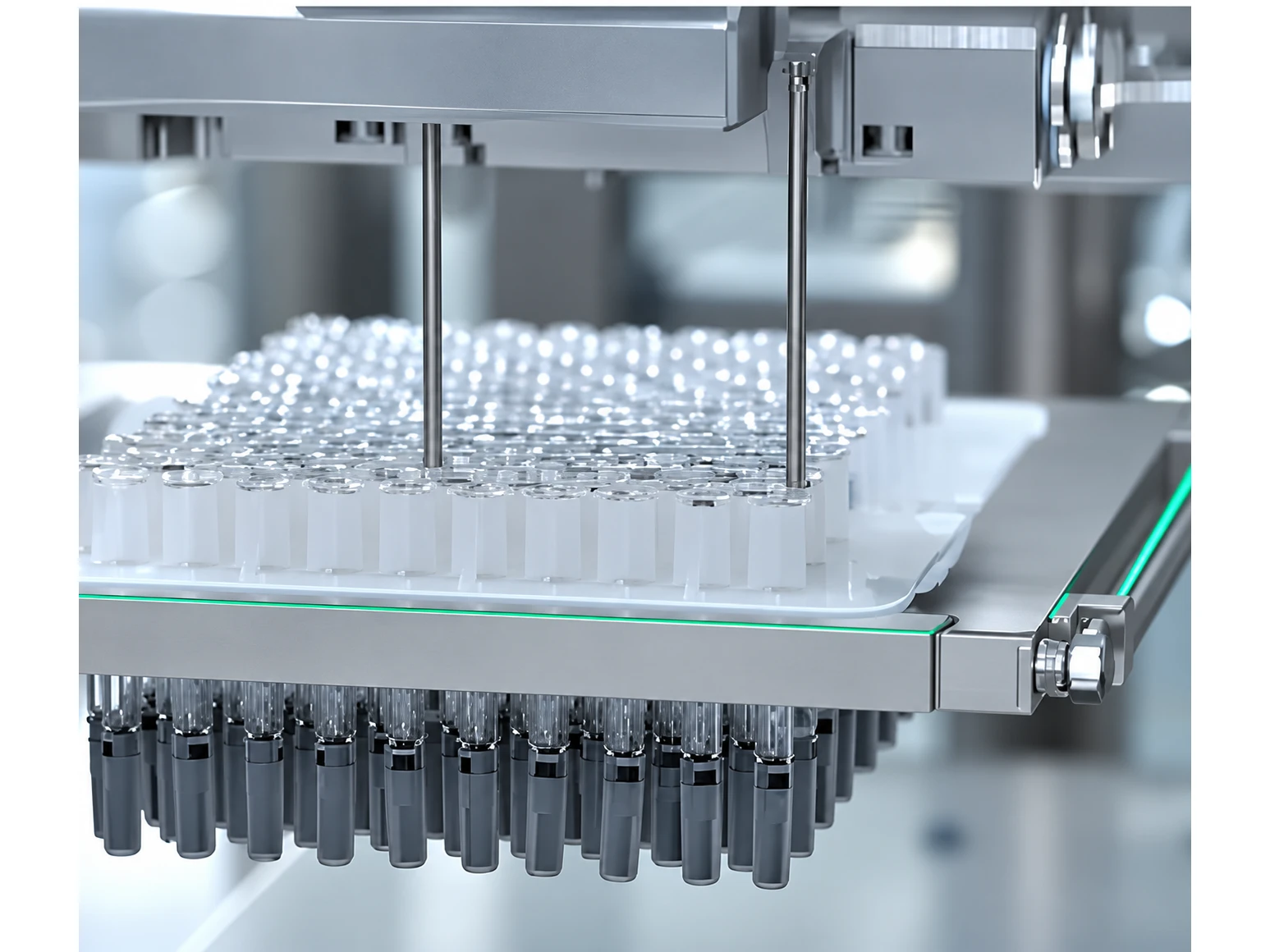
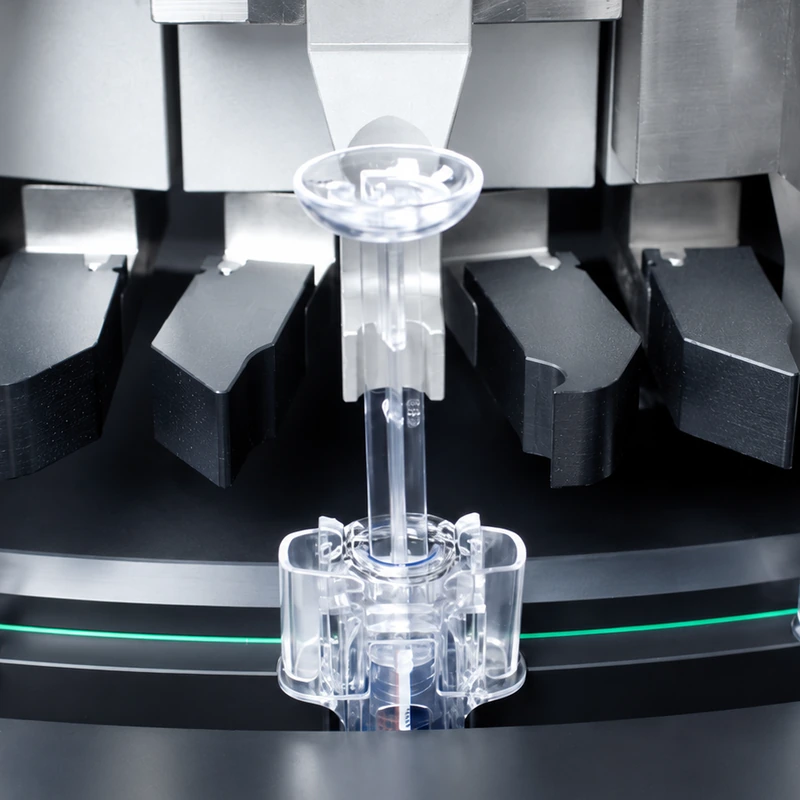
Process context · Nest of syringes positioned below the processing head
01 /
PFS Filler
Use representative syringes in their intended nest or holder and identify the plunger design. Confirm dosing and insertion as separate operations, including manual interventions. The usable batch is the liquid remaining after sampling, priming and fluid-path hold-up have been allowed for.
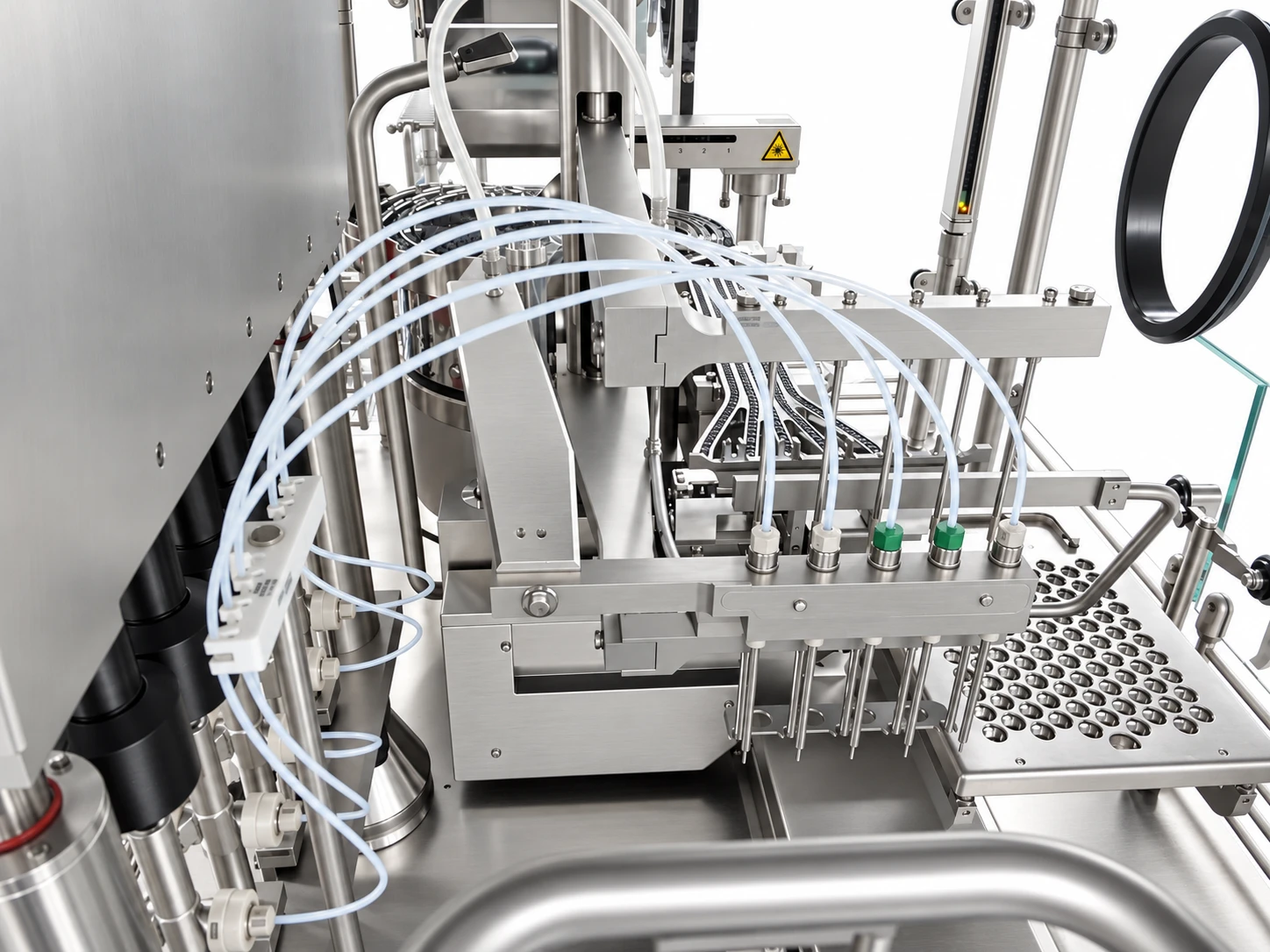
Process context · Product tubing above a nest of containers at the filling station
Example project input
Budget fluid-path priming and residuals separately. Retain samples for checking headspace and final plunger position using the proposed elastomer.
60
Syringe barrels in the bench trial
0.5 mL
Nominal fill per barrel
30 mL
Liquid delivered into the barrels
—
Process options
Filling technologies
Filling technology
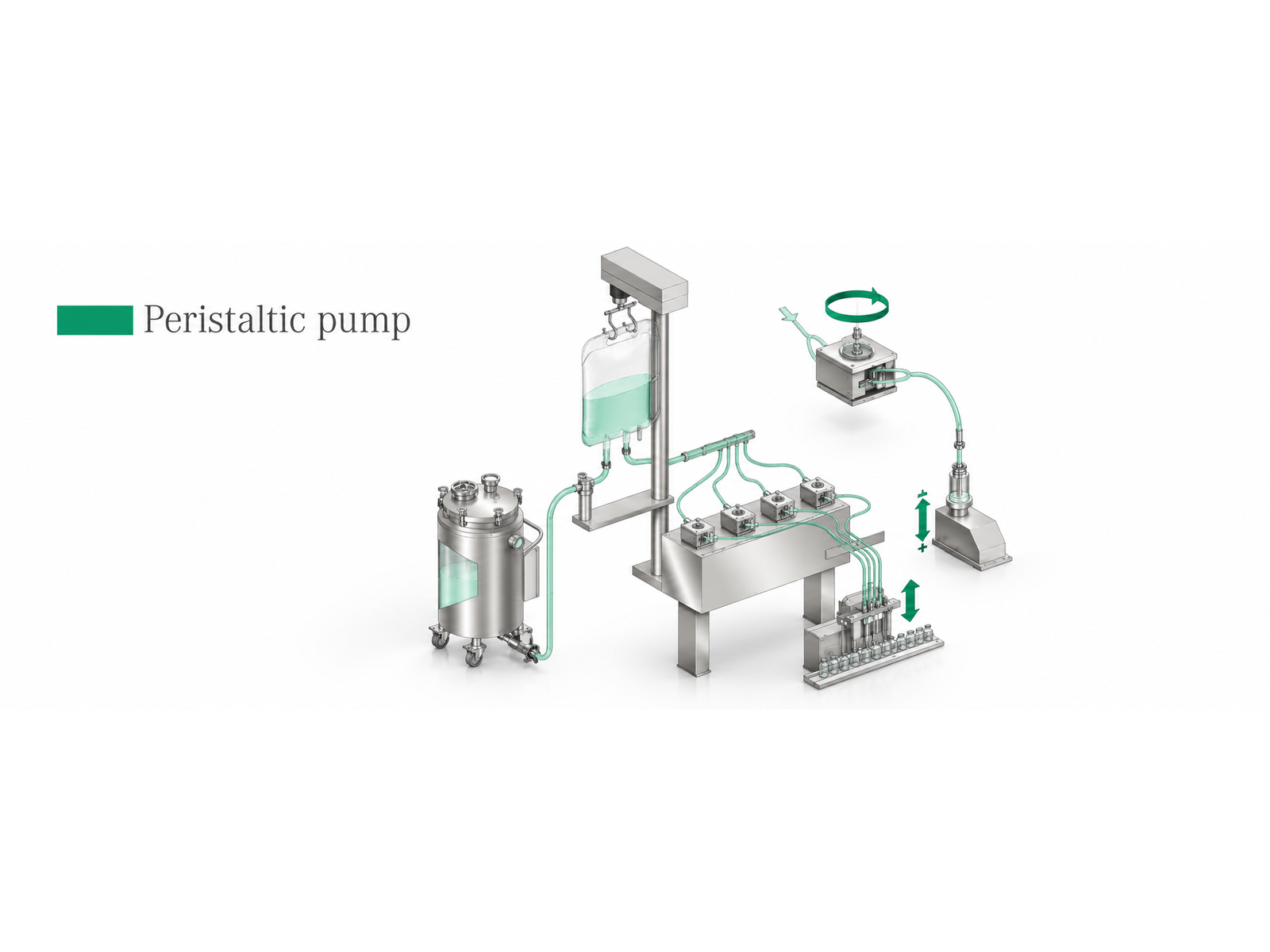
Peristaltic pump
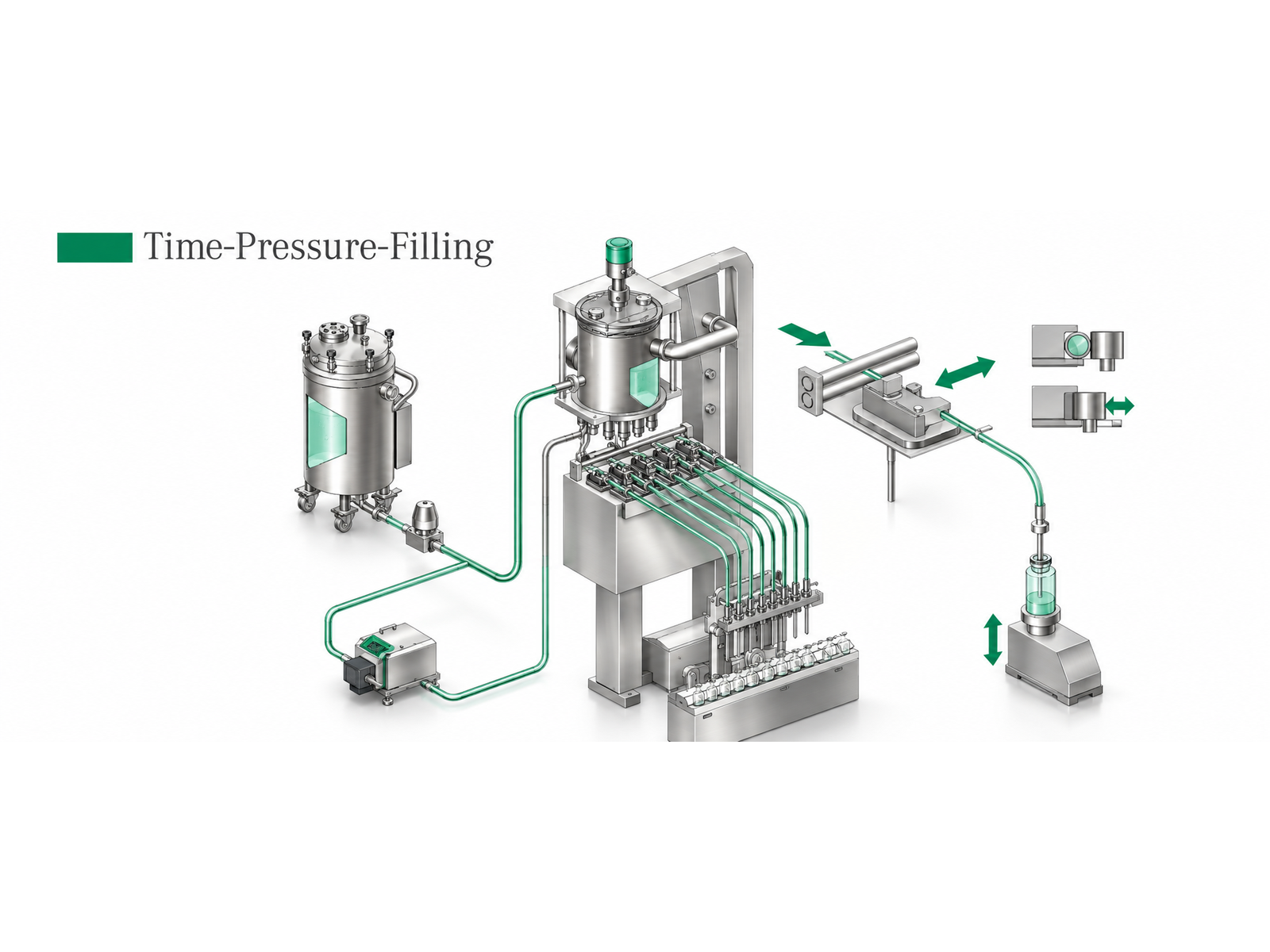
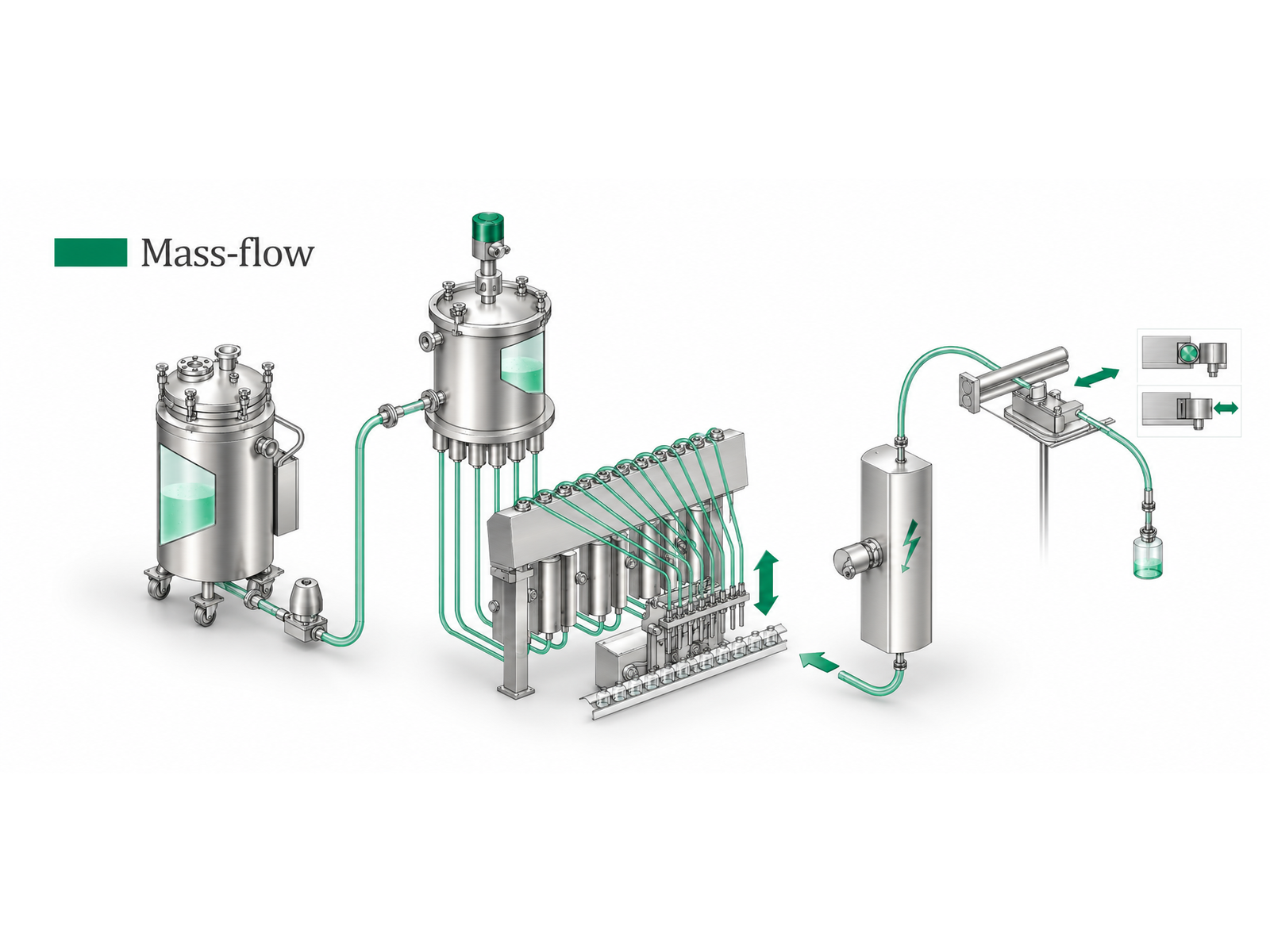
A flexible tube carries the liquid while rotating rollers control dosing. The product contacts the tube rather than the pump mechanism. This principle is used when a disposable product path and gentle handling are priorities. Tubing selection, product compatibility and the changeover procedure should be reviewed for each application.
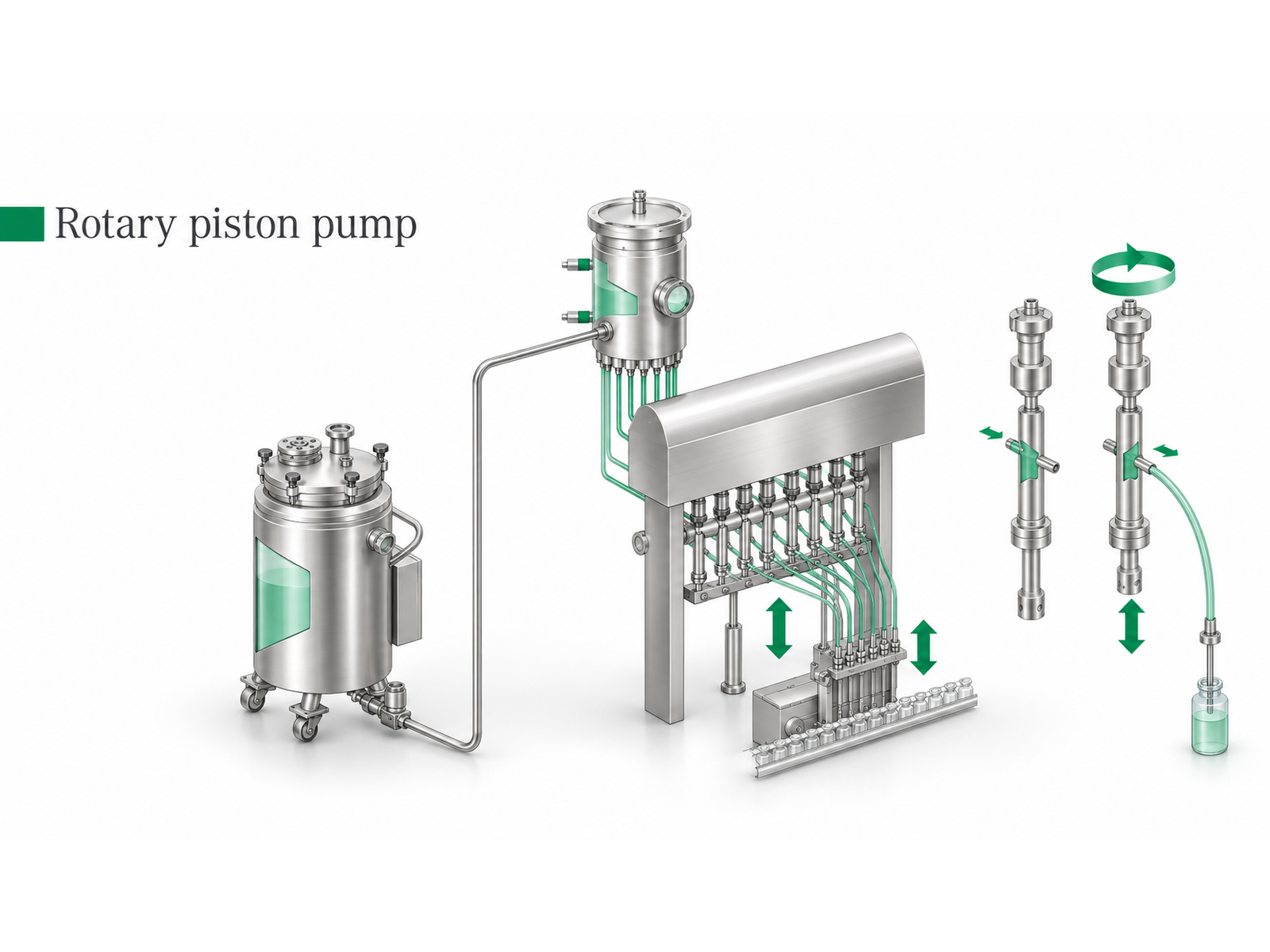
A piston draws liquid into a cylinder and then dispenses a measured volume through the outlet. The selected piston, valve and product-contact materials determine the application range. Review viscosity, cleaning requirements and the required filling volume together with the product and container format.
Controlled pressure moves liquid through a filling valve. The opening time and supply conditions determine the dispensed quantity. Product properties, pressure stability and the valve configuration are evaluated together when setting up the filling process.
A flow sensor measures the product passing through the filling path and provides feedback to the dosing valve. The process is evaluated around the required fill mass, product behaviour and cleaning strategy. Sensor selection and the control sequence depend on the application.
A good average dose can conceal unstable startup fills or inconsistent closing. Compare the first accepted syringe with later samples, and assess fill mass together with residual air and plunger position. Record adjustments rather than averaging across different setups.
03 /
Technology & features
Review the product-contact path, needle access and support surfaces with the actual barrel dimensions. Select the dosing principle and plunger insertion method for the formulation and component combination; their availability is configuration-specific.
Specify the measurements for dose, headspace and insertion position. Check how the tubing, needle and closing tools are removed, cleaned or replaced between batches, and how setup references are restored after changeover.
Process context · Product tubing above a nest of containers at the filling station
04 /
Applications
The trial can support formulation and component development or preparation for a larger fill-finish study. Clinical-batch use additionally depends on the manufacturing environment, qualified process and release controls defined by the site.
05 /
Technical data
Use these inputs to define the proposed configuration. Confirm operating values against the selected model and trial conditions.
Selection inputs for PFS Filler
Project input
What to record and why
Available fill material
Record the material quantity released for the trial, excluding retained samples. Set aside the amount needed for priming and recovery checks.
Syringe and plunger format
Give barrel and plunger drawings, support surfaces and the planned insertion position. Use the actual pair during the handling trial.
Fill mass
State the target mass per syringe and how the empty container is tared. Include product density at the trial temperature if converting mass to volume.
Priming and residual volume
Measure product used before the first acceptable fill and what remains after the last one. Keep these separate from delivered dose.
How it works
How is a stable small-batch dose established?
Prime the selected fluid path, confirm needle position and measure filled syringes using the agreed tare method. Separate setup material from accepted output and retain observations of end-of-dose dripping or air.
How should closing be evaluated?
Use the intended plunger and insertion method, then measure final position and examine residual air. Compare samples across the batch and inspect tooling and support surfaces before repeating the setup.
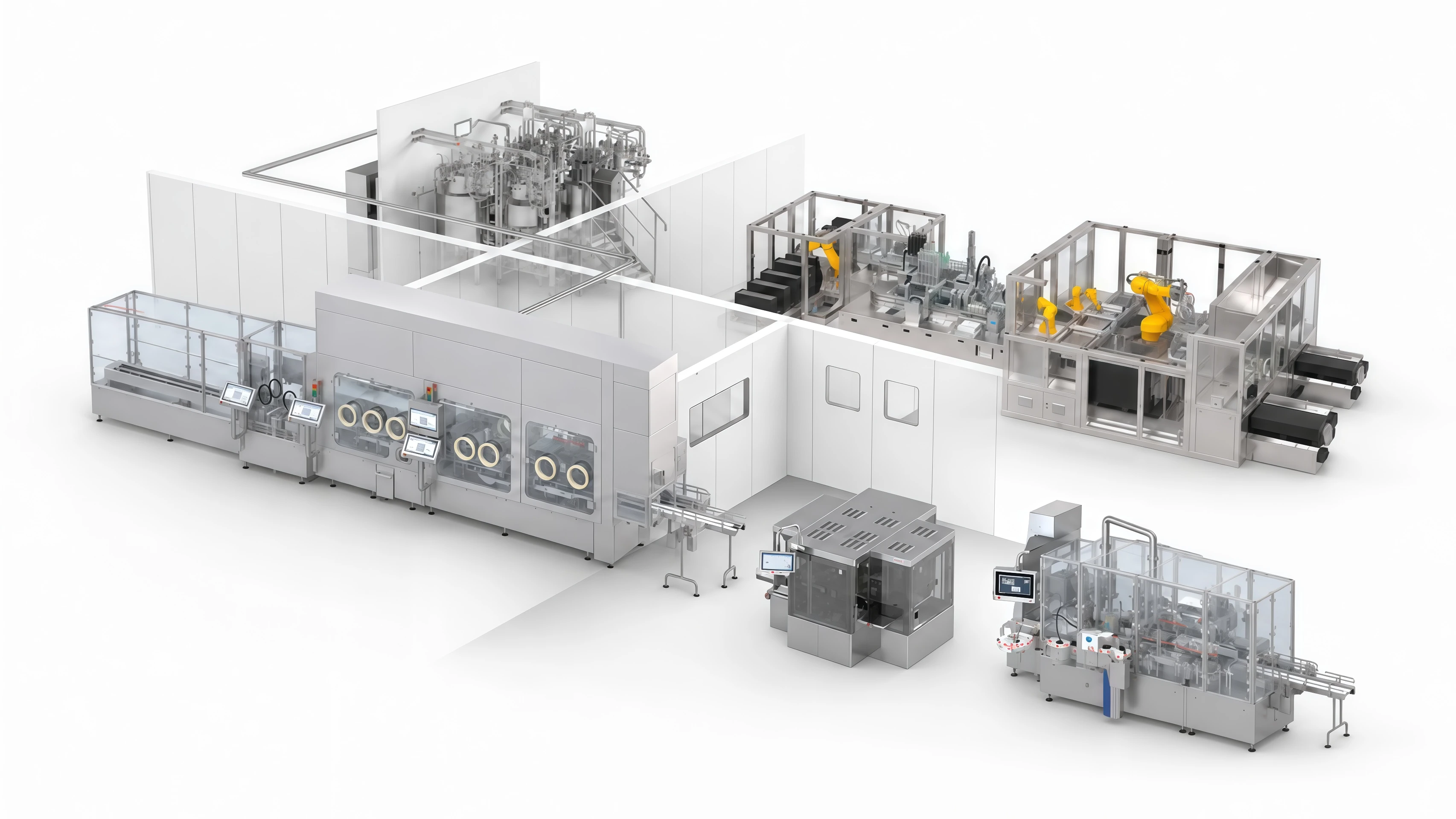
Production line · Equipment context
Nested syringe filling line
Explore the process areas on the production line associated with this equipment.
Production layout7 equipment areas · Scroll to explore
Follow the ready-to-use container branch, from bag removal to filling and downstream pack handling. The line provides process context; the individual product is not identified as a separate station in this view.
Receive prepared liquid and the agreed syringe and plunger presentation. Keep filled samples traceable to the filling and closing conditions before closure-integrity, device-fit or delivery testing. The production-line illustration is a transfer context, not the benchtop machine configuration.
06 /
Services
Define the equipment scope
Choose a dosing path that suits the available product quantity and check how the syringe is supported during closing.
Identify the contact parts and format tooling for PFS Filler. Agree access for cleaning, the spares to hold and the operating records the site will need.
Representative production-intent components are needed to evaluate fit and closure behaviour. A result with a different barrel or elastomer does not establish the intended combination.
Does a low-volume trial establish material yield?
Only when startup consumption, samples, accepted fills and residual material are reconciled. Report each separately so the result can be interpreted for a scarce product batch.
Is plunger insertion automatically vacuum-assisted?
No. Specify the intended method and its compatibility with the barrel, plunger and product. The benchtop label alone does not define how the syringe is closed.
08 /
Contact
For a configuration review, include available fill material, syringe and plunger format, fill mass, priming and residual volume.