Assess cartridge filling and closure placement with the intended glass barrel, plunger and seal. A tabletop trial helps establish the liquid dose, usable cartridge volume and component positions before the filled cartridge is evaluated in its delivery device.
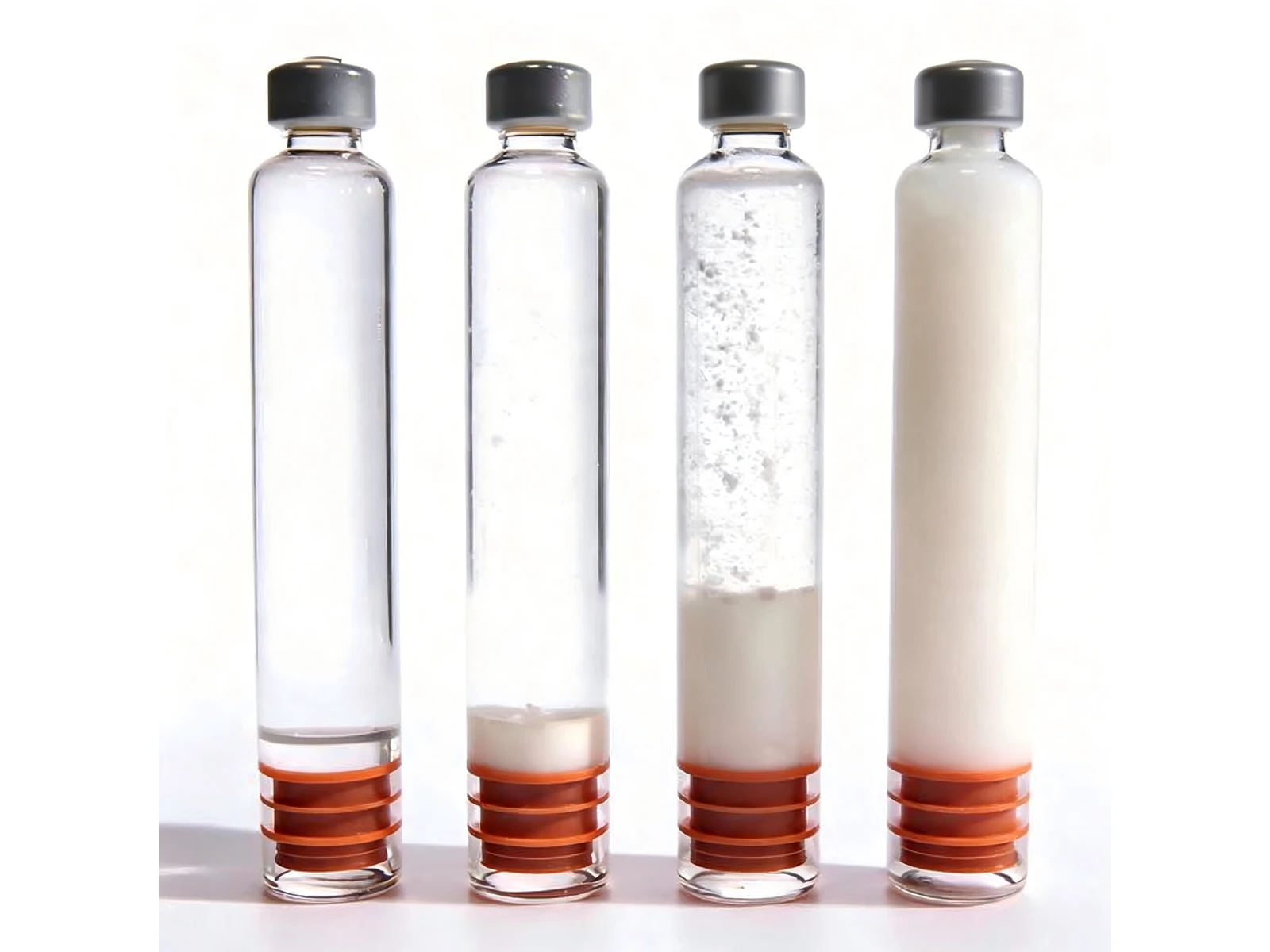
Process context · Cartridges with different product appearances and elastomer closures
01 /
Cartridge Filler
Supply component drawings and representative cartridges, plungers and caps. The trial needs a defined filling orientation and closure sequence, including which operations are manual. Allow product for priming and retained volume in the selected fluid path as well as the cartridges collected for testing.
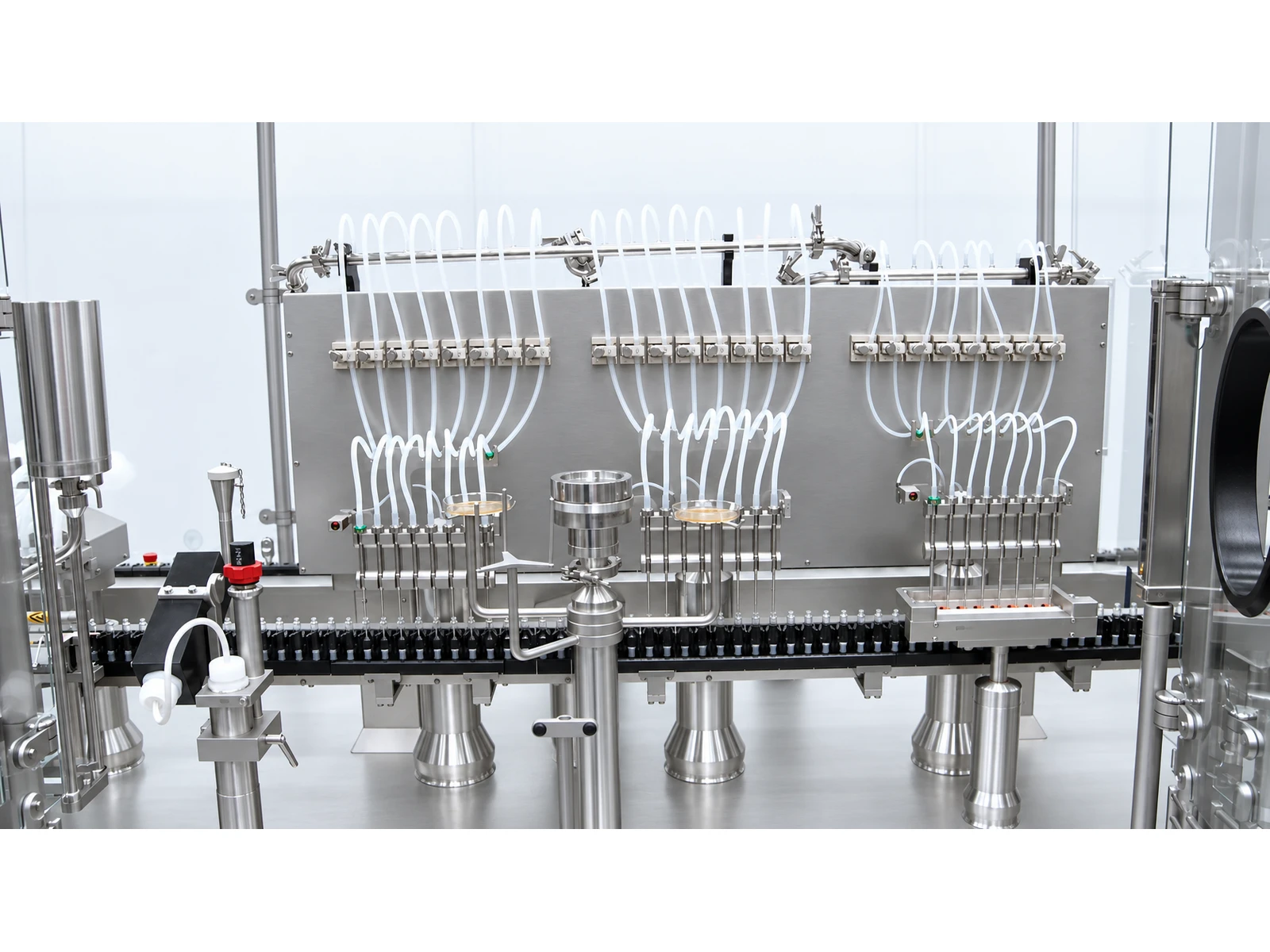
Process context · Array of filling needles and product tubing over the cartridge transport
Example project input
Set aside extra product for priming. Record the position of the stopper and the closure after filling before testing fit with the intended delivery device.
80
Cartridges in the bench trial
1.5 mL
Nominal fill per cartridge
120 mL
Liquid delivered into the cartridges
—
Process options
Filling technologies
Filling technology
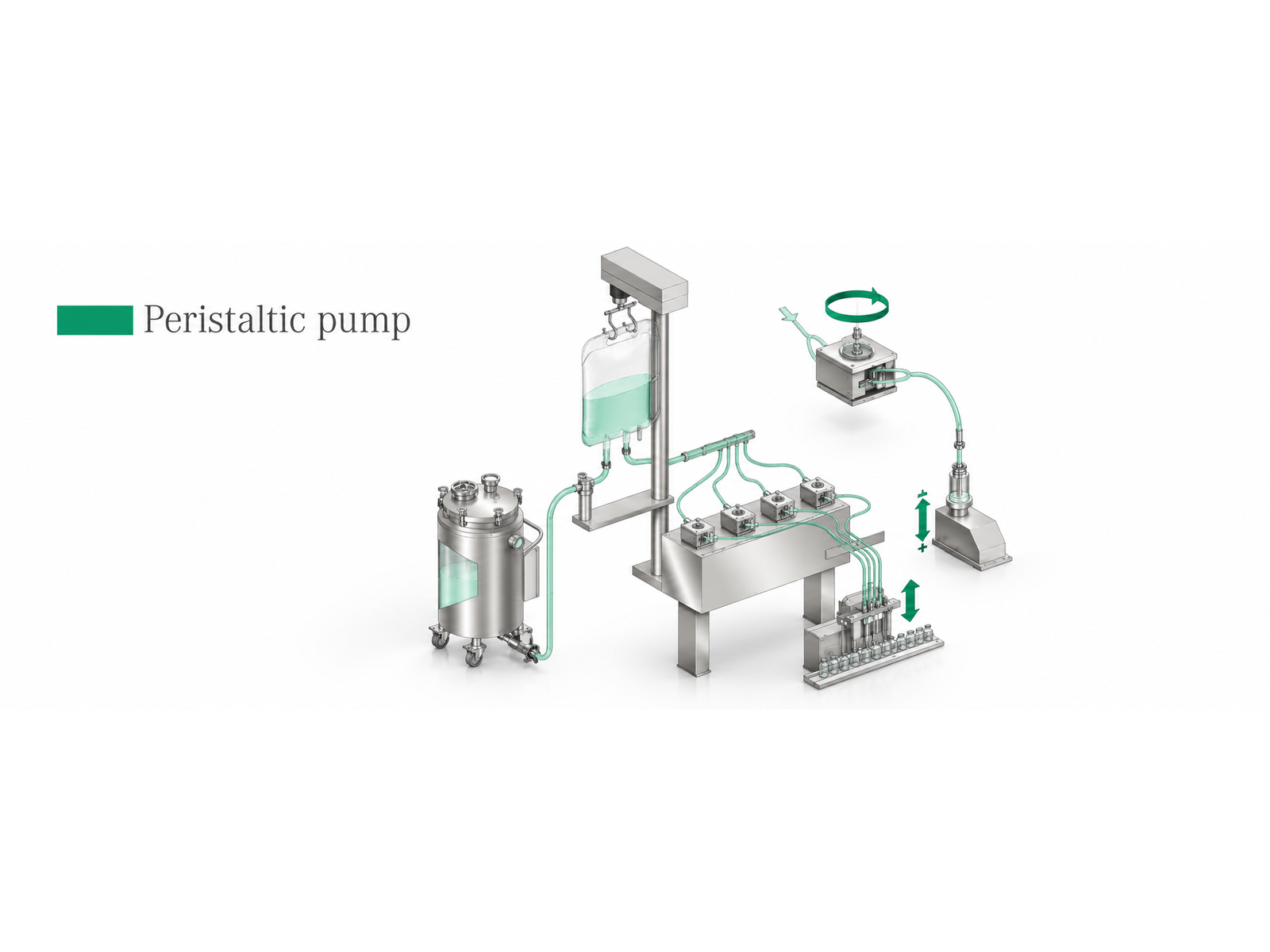
Peristaltic pump
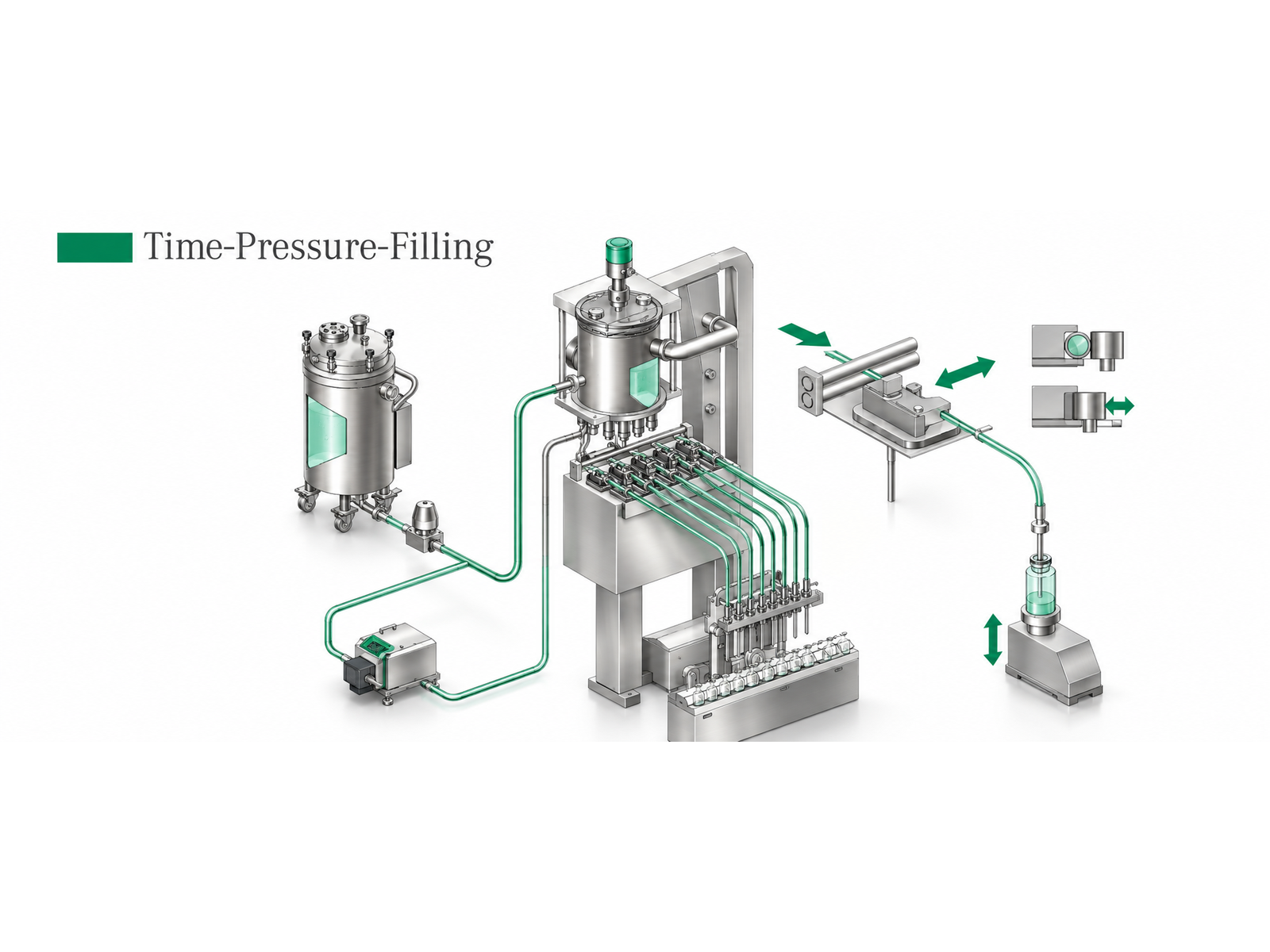
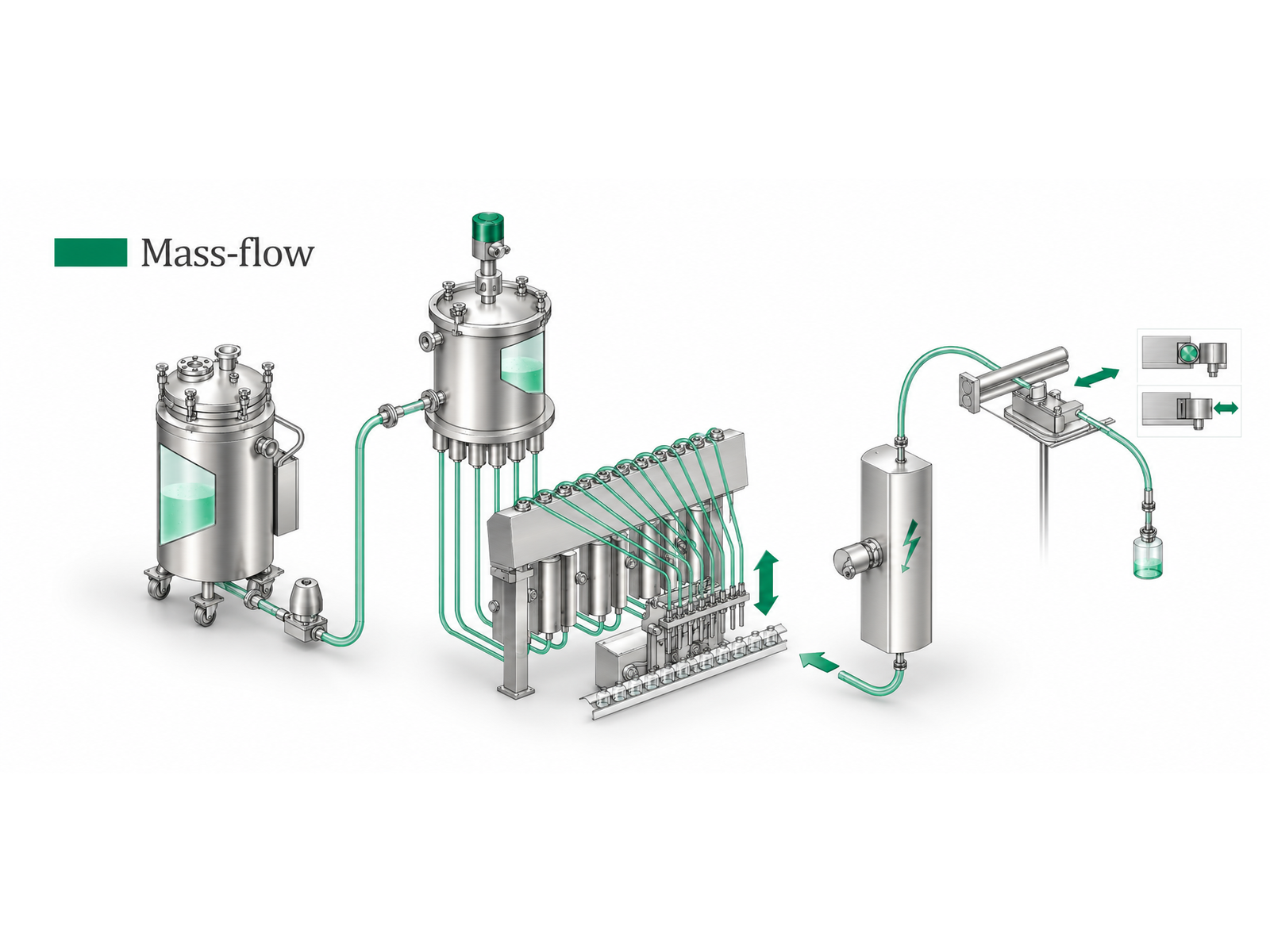
A flexible tube carries the liquid while rotating rollers control dosing. The product contacts the tube rather than the pump mechanism. This principle is used when a disposable product path and gentle handling are priorities. Tubing selection, product compatibility and the changeover procedure should be reviewed for each application.
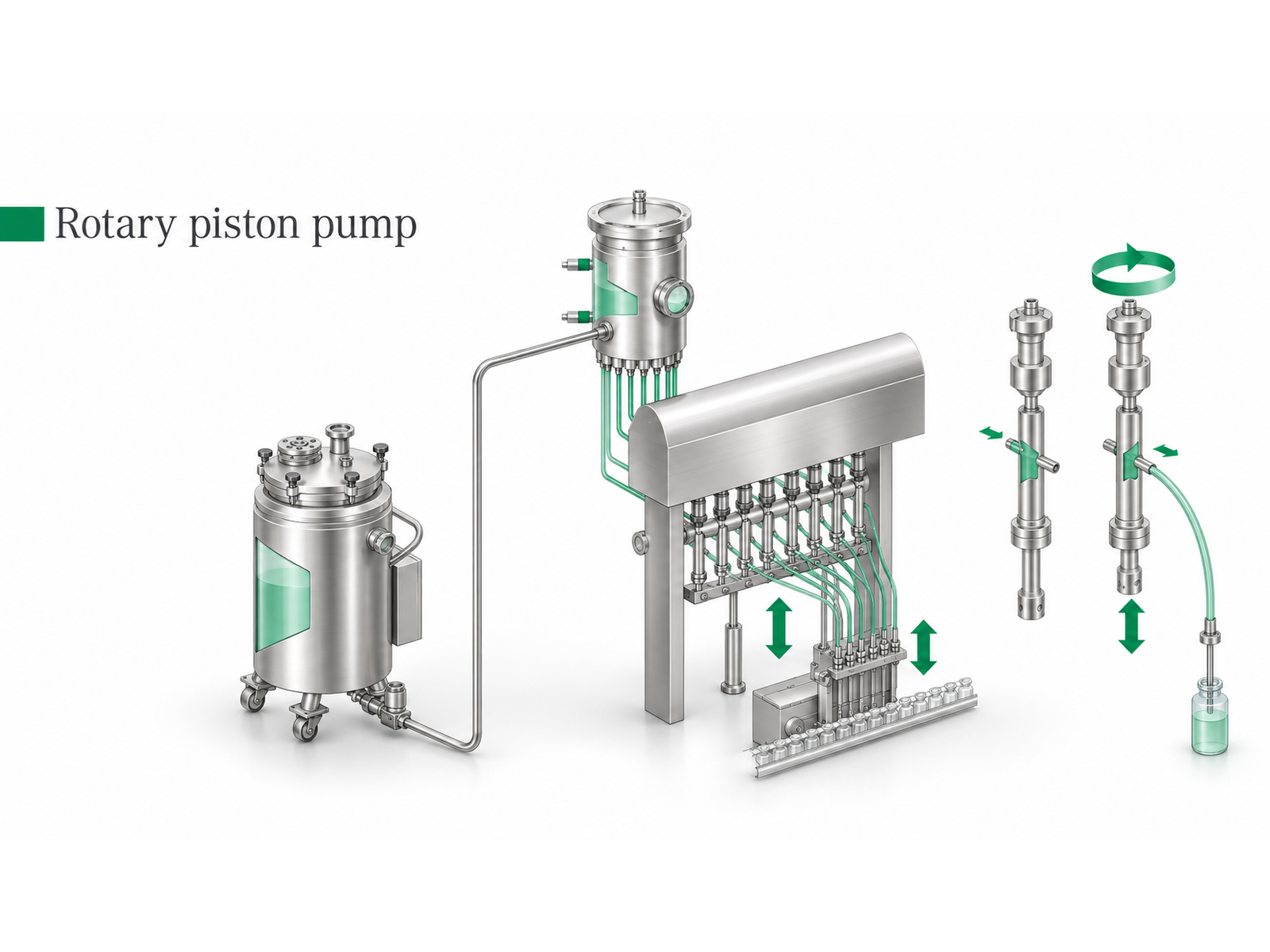
A piston draws liquid into a cylinder and then dispenses a measured volume through the outlet. The selected piston, valve and product-contact materials determine the application range. Review viscosity, cleaning requirements and the required filling volume together with the product and container format.
Controlled pressure moves liquid through a filling valve. The opening time and supply conditions determine the dispensed quantity. Product properties, pressure stability and the valve configuration are evaluated together when setting up the filling process.
A flow sensor measures the product passing through the filling path and provides feedback to the dosing valve. The process is evaluated around the required fill mass, product behaviour and cleaning strategy. Sensor selection and the control sequence depend on the application.
At small scale, stable dose delivery and repeatable plunger positioning matter more than nominal speed. Record bubbles, drips, damaged components and closure position against each setup condition; these observations help separate a handling problem from a fluid-path problem.
03 /
Technology & features
Select the metering principle and needle arrangement around viscosity, target dose and product compatibility. Confirm that the holder supports the cartridge without imposing unintended force on the glass, and that tooling gives access to the required filling and closing positions.
Check cleaning or disposable-path changeover, plunger insertion tooling and the adjustment references used by the operator. Agree which dose and closure checks are built into the machine and which require separate laboratory measurement.
Process context · Array of filling needles and product tubing over the cartridge transport
04 /
Applications
Use the trial for formulation handling, container-closure selection and device-fit assessment. Any use for clinical supply requires the site to define its manufacturing environment, process qualification and release controls; a tabletop format does not establish those conditions.
05 /
Technical data
Use these inputs to define the proposed configuration. Confirm operating values against the selected model and trial conditions.
Selection inputs for Cartridge Filler
Project input
What to record and why
Cartridge dimensions
Include barrel, neck, shoulder and plunger dimensions with tolerances. Confirm both filling support and later fit in the intended device.
Closures
Identify the plunger and cap or seal that complete the cartridge. Check seating, insertion position and compatibility with the intended device.
Development dose
State the trial dose and acceptable measurement range. Distinguish intended delivered dose from any filling allowance.
Device fit test
Identify the assembly fixture or device used to verify cartridge fit. Check orientation, engagement and final position with representative samples.
How it works
How do you establish a repeatable filling setup?
Install the specified cartridge holder, prime the fluid path and verify delivered mass using the agreed measurement method. Check needle position and end-of-dose behaviour before collecting the test series; keep startup material separate.
How is a filled cartridge assessed before device assembly?
Record the fill and plunger positions and inspect the glass and closure. Then test representative units in the intended receiving device. Clean the holder and inspect contact and closing tools between component lots.
Production line · Equipment context
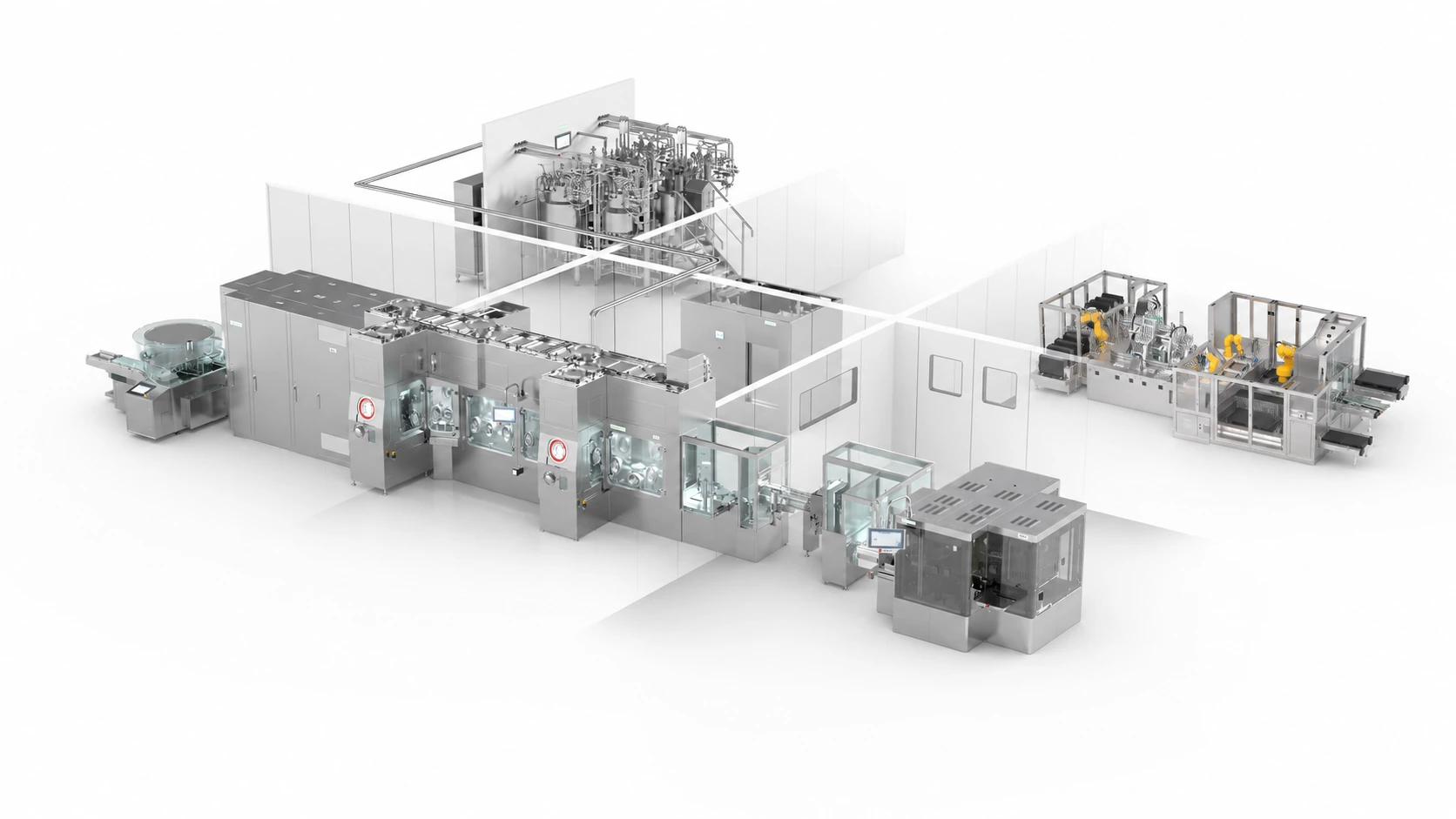
Cartridge filling line
Explore the process areas on the production line associated with this equipment.
Production layout6 equipment areas · Scroll to explore
Explore the primary container train and its separate secondary packaging cell. The line provides process context; the individual product is not identified as a separate station in this view.
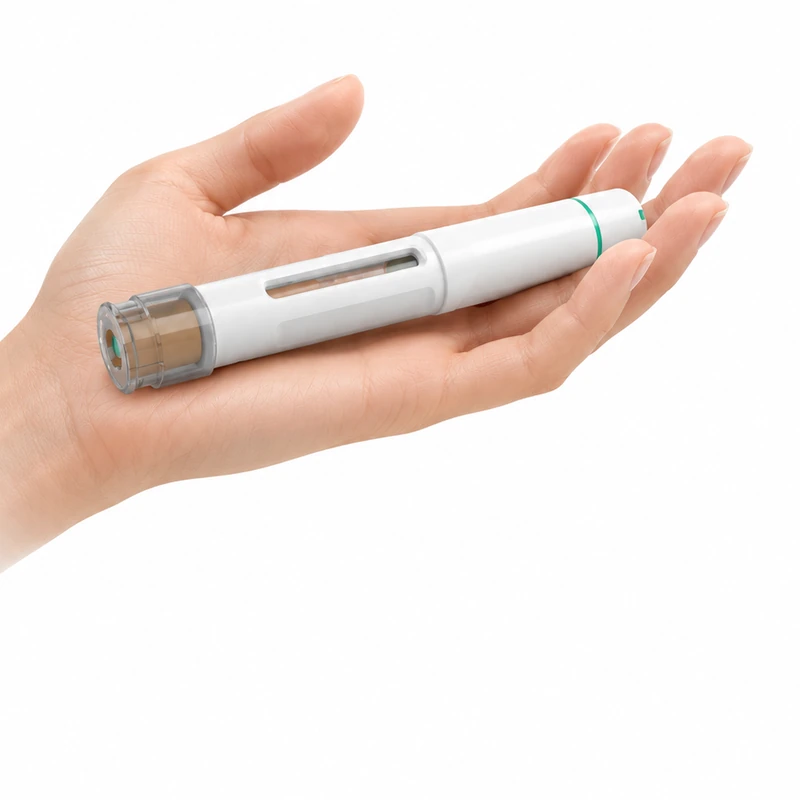
Check the filled cartridge in its receiving device
Receive prepared liquid and the specified components in their agreed condition. After filling and closure, keep cartridges traceable to the settings used and transfer them to dose, closure-integrity and device-function evaluations. Pen assembly is a separate equipment scope.
06 /
Services
Define the equipment scope
The available sample volume and the test device determine how much priming and setup material can be used.
Identify the contact parts and format tooling for Cartridge Filler. Agree access for cleaning, the spares to hold and the operating records the site will need.
Provide the barrel and closure drawings, component samples, intended dose and available formulation volume. Include the receiving device or a defined interface fixture when device fit is part of the trial.
Are all four liquid metering methods included?
No. The filling-technology panel describes alternative principles. The selected pump, valve, needle and fluid-path components must be specified for the proposed formulation.
Does the machine assemble the finished pen or injector?
Cartridge filling and closing is a distinct operation. Device insertion, assembly and functional testing need their own scope and equipment review.
08 /
Contact
For a configuration review, include cartridge dimensions, closures, development dose, device fit test.